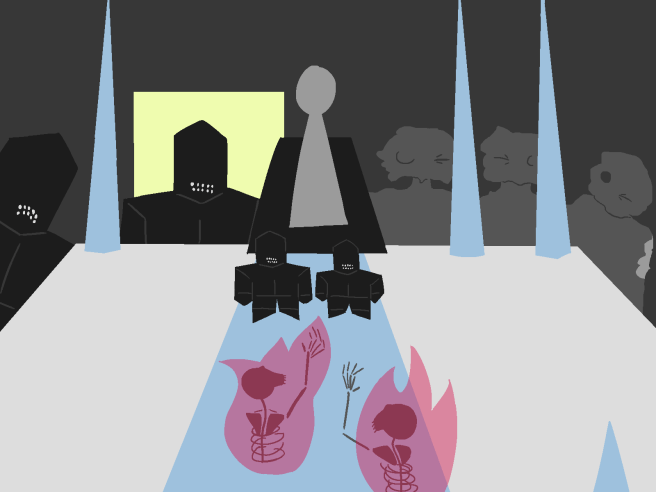
Homer VS the Sea-Thing

(This is part five of an ongoing series starting here. Our story so far: Aria Twine has led her minotaur, Homer, to become one of humanity’s royal commanders. Now he’ll have to beat seafolk at the board-game which determines the fate of nations.)


Homer’s sweat dripped through his fur like tiny, salted streams. He adjusted his dark goggles to block out the fiery summer sunlight.

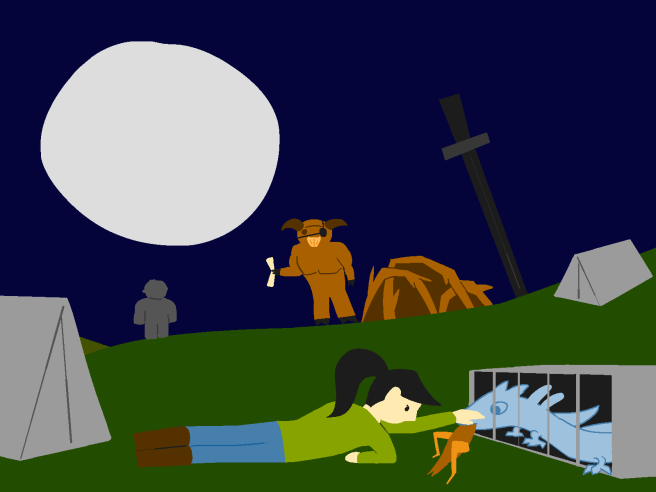
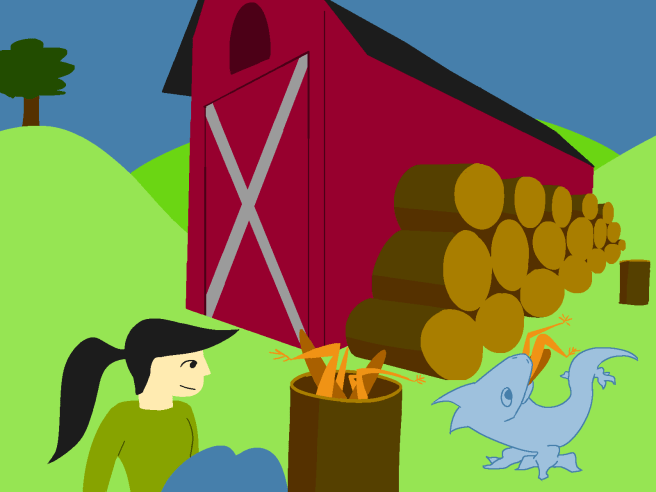
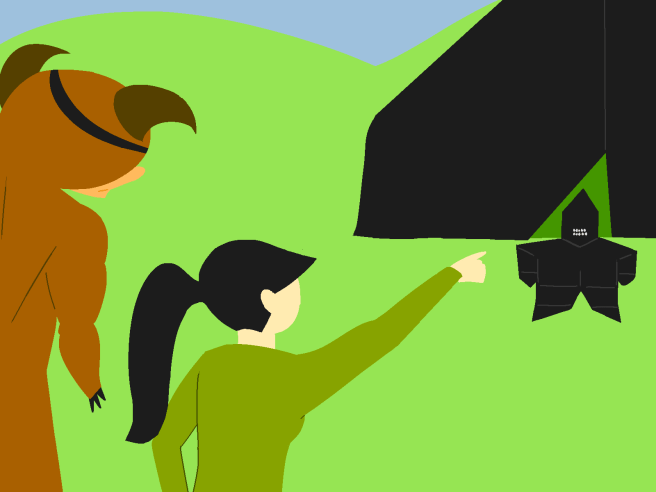
Despite the heat, a circle of snow suffocated the dry grass. The still air became a frozen gust when Scales the ice-dragon exhaled. It wore armor like transparent glaciers. Its wings were fifteen feet from tip to tip, dangling icicles.

pict1.png

“Good boy, Scales! Good boy,” cooed Aria. The royal beast-master lent her a thick glove to pat her dragon’s muzzle. “He’s still on elvish fodder?”

“Yep. A barrel of crickets a week.” The beast-master scratched his scar. “This guy’s bigger at six months than most dragons I’ve seen at five years.”

“Is he spitting ice yet?”

“Hoo yeah. Every morning.”

The dragon puffed mist from its nostrils. “His frosty breath could be handy against seafolk.”

The beast-master shrugged. “You don’t see many dragons in table-war ‘cause they usually fly for the wild wastes as soon as their wings come in. If you wanna use Scales on the table, make sure the map’s far from the wastes, or his game-piece will escape. It’s no good keeping the dragon in our stables if its game-piece is bust.”

Aria nodded while checking the dragon’s eyes: light blue, clouded like cheap crystal balls. “I need exclusive rights to this dragon’s brass. Don’t let the other humans in the tournament use it.”

The beast-master cocked his head. “Aren’t you dead, Aria?”

Aria corrected herself: “Homer, the minotaur, needs this dragon’s brass.”

The beast-master called his gnomes and they waddled over to take Scales’ measurements. “Good luck,” he said to Homer. “Against seafolk, you’ll need it.”


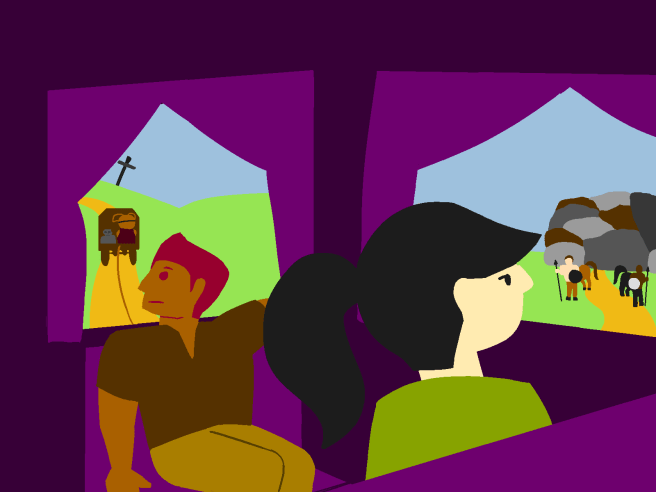
“I’ve never been to the wild wastes,” said Sir Jameson. The Great Sword sank behind hills in the carriage’s back window. “I’ve never left human territory, actually.”
pict2

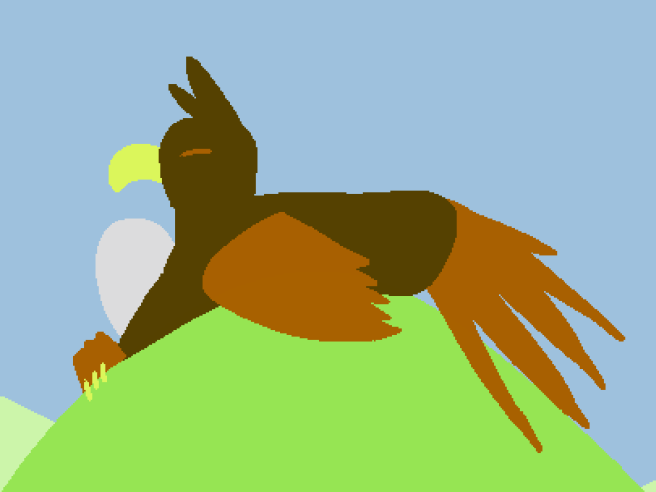
Aria squinted skeptically at the centaurs’ border wall. “When I was a royal commander, I’d be carted across the wastes every week to fight elves and dwarfs. Sometimes we’d snag game-pieces on the way, to keep my brass collection unpredictable.”

“Game-pieces?” Jameson frowned. “You mean animals?” Aria shrugged. “Watch your language around the wall,” said Jameson. “Centaurs won’t like being called game-pieces, and they’ll call your griffon a prisoner of war.”

“Relax,” said Aria. “We’ll deal with stuff like that once we’ve beaten the dwarfs. Oh! Hey there, Homer.” Homer easily matched the pace of the carriage on foot. “Are you and Quattuor feeling cramped in the second carriage?”

“Awks.” Homer mimed holding an object in both hands.

“You want your box? Jameson, help me lift this thing.” Aria and Jameson hefted a wooden box from under their seats. “Careful, Homer, these figurines are heavy!”

Homer held the box as easily as Aria might hold a single brass card. “Ow ong?”

“We’re a few days from the seafolk’s dock.” Aria massaged her fingers. “You’ll love it, Homer. Seafolk can’t resist putting on a show, and there’s all-you-can-eat shrimp.”

Homer gave a thumbs up.

The carriage-driver pulled his horses’ reins as they approached the centaurs’ wall. “Get back in,” he said to the minotaur, “and everyone, have your brass ready for inspection.”

“Brass?” Aria tapped her foot. “But my brass says that I’m dead.”

“That won’t matter,” said the carriage-driver. “You’ll see why. I’ve made this trip before.”

Aria heard hoof-steps as centaurs approached the carriages. Two interrogated the carriage-driver, and another poked his nude torso into the carriage’s side-window. “Brass, please.” She and Jameson gave their brass identification cards to the centaur, but he declined to take them. “Those look like brass to me. You’re good to go!”


Beyond the wall humanity’s rolling hills gave way to desert, and across a river the desert gave way to mountains. Then thick forests buzzing with black beetles blocked the way, forcing the carriages to trek through tundra slick with ice to reach flat, black sheets of volcanic stone. A distant plume of dark smoke rained ash.

“I feel magma,” whispered Quattuor. He spoke up so Aria could hear him in the front carriage. “Ms. Twine, I request a stop to confer with the gnomish core for news.”

Aria leaned out the carriage window. “Driver, can you take us where the smoke’s coming up? Quattuor wants a lava-bath.”

The carriage-driver hesitated. “Lava spooks horses. This is as close as I’ll get.”

“Sounds like you’re walking, Quattuor.” The gnome stepped from the carriage and marched toward the plume of smoke. Aria tested the dark rock with her boot before stepping off the carriage. She arched her back to crack her spine. “Just a little longer to the docks, Homer.”

pict4

Homer pointed in the four cardinal directions to four different micro-climates.

“Yeah, the wild wastes are sort of a biome quilt,” said Aria, “and it’s never the same from month to month. You know why?”

He shook his head.

“Elves, forests. Humans, hills. Seafolk, saltwater. Land changes for those living there. That’s why seafolk can’t own property above sea-level: they’d salt up wells just by proximity. But there are so many monsters in the wild wastes, and they move around so much, the land is a patchwork mess. I’m not sure how dwarfs affect the land.” She spat on the ground. “They just eat whatever’s underneath them. Homer, has Quattuor taught you how this tournament works?”

The minotaur nodded. “Ah iddle.”

“A little,” repeated Aria. “We’re holding a tournament to find the best commander to fight the dwarfs. When you fight Ebi Anago, the gnomes will award both of you up to five points based on performance. Then the gnomes pair people with similar point totals for round two. Think you can pull off a five-point match?”

He nodded again and pointed near the smoke. Their gnome returned shiny, white, and dripping magma. “Guaddorr.”

“Quattuor. Any news?”

“Queen Anthrapas has assigned her remaining tournament seats,” said Quattuor. “Harvey, Jennifer, and Thaddeus join Homer in representing humanity. Harvey and Thaddeus are fighting elves in the first round. Jennifer will join us on the dock to fight seafolk.”

“Perfect,” said Aria. “Homer can outscore those kids no problem.”


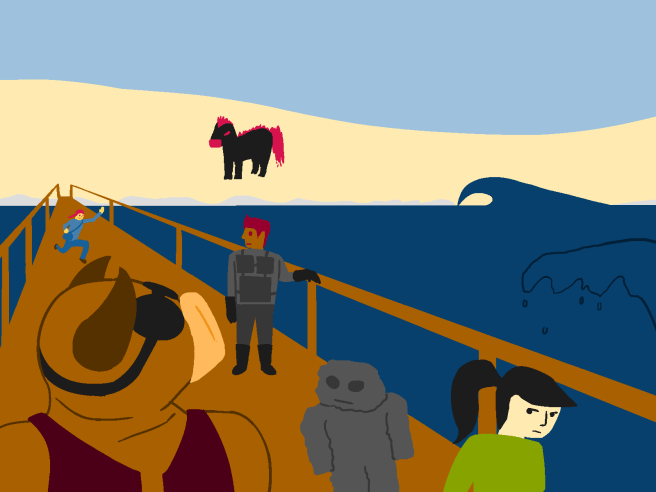
For the first time ever, Homer filled his chest with salty sea breeze. Waves fifteen feet high curled and crashed on white sand. A wide wooden dock stretched into the blue horizon. Sir Jameson’s gauntlet gripped the dock’s wooden railing like the boards beneath him might snap. “I’ve never trusted seafolk.”

“At least elves have legs,” agreed Aria. “You never know if seafolk are two steps behind or ahead.”

“I wonder what Jennifer thinks of them,” said Quattuor. “Here she comes.”

A sturdy black steed approached the dock. The mare’s mane stood on end like a trail of fire at night. Its nose twitched and unleashed a steamy cloud that enveloped its rider as she dismounted. She was about eighteen with red hair tied in a braid. She quickly spied Aria and sprinted down the dock after her. “Oh, great,” said Aria. “She’s a fan.”
pict5

Homer sniffed. Behind the scents of salt and fish he smelled ash and cinders. Jennifer’s horse waited patiently on the coast. Around its hooves, sand sizzled into glass.

“Aria Twine! Humanity’s path to victory! It’s an honor to meet you,” said Jennifer with a deep bow. “How’d you teach a minotaur to play table-war like that?”

“Where’d you learn to ride a Night Mare?”

“Oh, I’ve studied horses for years! Inspired by you, of course.” Jennifer jogged to keep up with Aria’s quickening pace. “I’ve read all about how you won matches with awesome animals! You changed the whole meta-game!”

“Nice to hear,” said Aria.

Jennifer clapped. “Can you tutor me?”

“Ha, no.” Aria pointed to Homer. “I’ve got my hands full.”

Jennifer’s smile sunk. Homer waved to her. “Well, can you autograph something for me?” Jennifer opened her purse and dug through brass cards to produce one wooden hobby-card.

Aria recognized it by sight. “That’s a hobby-copy of my old brass, isn’t it?”

“I used to play with it all the time!”

Aria finally smiled. “Okay, I’ll sign it if you teach my apprentice about seafolk.”

“Oh.” Jennifer looked at Homer, who watched her behind dark goggles. “Deal.”

“Great. Get talking.” Aria swerved to put Jameson and Quattuor between her and Jennifer. Jennifer pursed her lips and turned back to Homer.

Homer’s face wasn’t built to smile, and his best attempt was a sickly grimace. “Heddo, Edafrr.”

“Hello? Was that hello?” Jennifer sighed. “You know, some of Anthrapas’ commanders are cross with you. Tournament seats were tight as they were, and you took one of them.” Homer shrugged. “But anyway, have you fought seafolk before?” He shook his head. “Really? The egg thing you pulled on Harvey seemed like a seafolk trick. How many official matches have you played?”

Homer scratched under his chin. “Doo.”

“Two?” Jennifer almost tripped. “You’ve played table-war just twice?” She folded her arms. “Well, seafolk is a catch-all term for sentient creatures from the ocean. They’re rich, because the war against demons submerged most of the planet’s land-mass. They’re so rich they paint all their figurines in true-to-life color!”

The end of the dock came into view; wooden benches formed a semicircular theater facing the empty ocean. A sizable audience was already present.

pict7

“Seafolk are great at table-war, partly because they can buy the best game-pieces, but also because they don’t think like us. I’ve seen seafolk bring a warship to battle on a landlocked map. When the match started they toppled it to use as cover! The seafolk said, afterward, he didn’t even know what a boat was.”

“Hm,” mumbled Homer.

At the end of the dock, Aria made Homer lie on a bleacher in the front row. “Your game’s after sunset. Rest until then.”


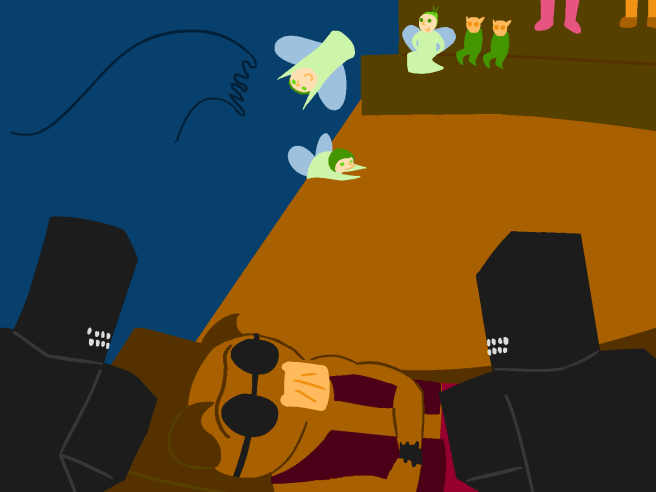
The elves in the audience took turns diving into the ocean, screaming and cheering, then climbing back onto the dock to dry off. Homer knew elvish ambassadors were chosen by height, not political savvy, but they should have known to keep quiet when someone was trying to nap.
pict8

Nonetheless Homer managed to fall asleep. He woke after sunset to gravelly voices:

“Minotaur.”

“Look. Scars.”

“Missing an eye.”

Homer pretended to stay asleep. He sniffed the dwarven odor of carrion and crushed rocks. He heard the clinking of their full-body armor.

“Missing an eye, but good at table-war.”

“Kill it?”

“Gnomes would kill us with demons.”

“Let gnomes kill us if death means victory for dwarfs.”

“If we’re lucky, gnomes would kill us. If we’re unlucky, the Mountain Swallower would take us.”

The chills down the dwarfs’ spines were so intense, even Homer shivered. “Mountain Swallower worse than death.”

“Just watch the minotaur.”

“Agreed.”

The dwarfs sat two rows behind Homer. Homer yawned and sat up. He saw Aria and Jameson talking to gnomes in the bleachers.

“Oyster, sir?” A gnome offered Homer a platter. “Shrimp and oyster, all ocean-fresh, courtesy of Emperor Shobai.” Homer took a shrimp. It had beady black eyes.
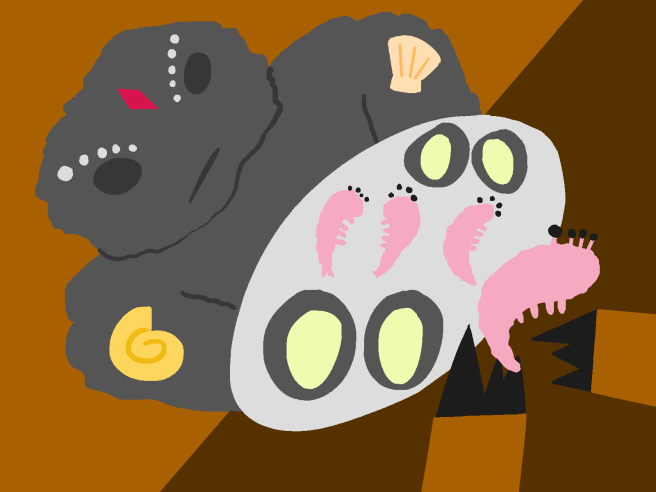
pict10

“Take as much as you wish, sir.” The gnome wore shells and jewelry. “I am Emperor Shobai’s official translator. I will assist in the games tonight. Please find me if you have any questions.” Then the gnome left to offer seafood to elves. “Oyster, ma’ams?”

Aria snatched an oyster as she strode to Homer’s side. “Rested up?” she asked. “We’re in for a show. Shobai’s fourth wedding is tonight.”

“Eddin?”

“Didn’t you have weddings in your labyrinth?” Aria tilted her head back and drank the oyster. “It’s when people promise to stay together. Look, they’re starting!”

The ocean before them bubbled music like the calls of distant whales. A glass tank rose from the depths lifting enough water to fill a lake. Inside the tank was another semicircular theater packed to the gills with seafolk playing conch-like instruments. Most of the seafolk were eel-like with mouths gaping like goldfish. Other seafolk were more fishy, with long, finned tails. A few seafolk were unique, sporting tentacles or urchin spines or shells from which glowing tendrils grasped hungrily. Homer covered his ears as the music climaxed, then stopped.

Bright bio-luminescent sparks lit the tank like fireflies, revealing the underwater emperor. Emperor Shobai was a clam fifteen feet across. From its hinge jutted ten gnarled crab legs twitching like red robes. Each segment was wrapped with gold rings.

pict12

The first stars appeared above the audience.

The official translator-gnome walked across the dock and raised his rocky hands. “Esteemed guests, Emperor Shobai extends his deepest gratitude for your attendance.” Behind him, the clam’s lips opened and closed. “We will keep the wedding short. Introducing the bride, Madam Kai Ba.”

A seafolk from the first row floated upwards. She wore a fluttery white wedding veil. The other seafolk lifted their instruments to blow haunting tones. Meanwhile, a second gnome joined the first on-stage. It wore a similar white veil.

Emperor Shobai opened his enormous mouth. Inside, three red tentacles three feet thick lifted the wedding veil with infinite care. Simultaneously, the first gnome unveiled the second gnome.

pict13

Madam Kai Ba was a seven-foot tall seahorse. Emperor Shobai retracted his tentacles and released bubbles. “Do you, Madam Kai Ba, take me as your husband?” translated the first gnome.

Madam Kai Ba released bubbles from her snout. “I do,” said the second gnome. “Do you, Emperor Shobai, take me as your wife?”

Shobai bubbled. “I do,” said the first gnome. Emperer Shobai slipped out a red tentacle carrying a golden conch on a silver cord, and placed it around his wife’s neck. “Let table-war commence!”


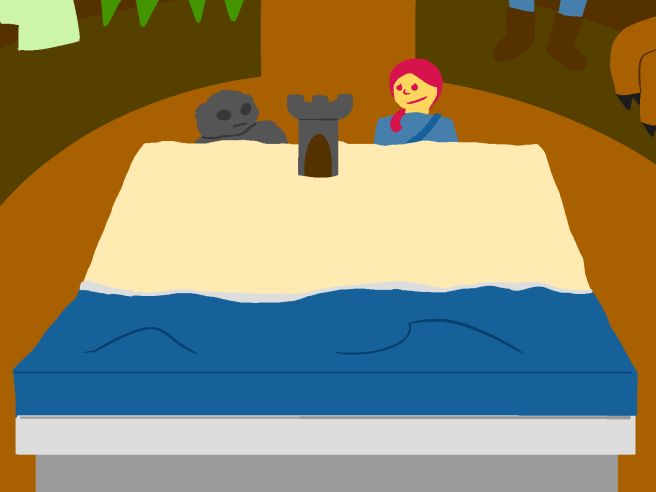
The seafolks’ tank moved back from the dock while gnomes set up the table. Jennifer’s side of the table was a sandy beach.

“Here.” Jennifer gave a gnome a brass card from her purse. This card was twice the ordinary length to accommodate a longer grid of dots. “I’m building this fort before the fight.”

“Have you the time and resources?” asked the gnome.

“Right here.” Another brass card changed hands. Gnomes constructed a tiny stone tower on the table. It had a wooden door.
pict15

Homer kept peeking over his shoulders at the dwarfs behind him. Their eyeless metal masks glared into his goggles. “Arra.”

“Hm?” Aria looked where Homer looked and saw the dwarfs. “Don’t worry about them.”

Homer struggled with consonants. “Oundain Salloer.”

“Mountain Swallower?” whispered Aria. “The Mountain Swallower is king of the dwarfs. A real piece of work. Oh, here comes Jennifer’s opponent.”

Another, smaller tank rose from the ocean between Shobai’s tank and the dock, opposite Jennifer at the table. A humongous sea star adhered to the tank wall with a thousand hydraulic suckers. A circular mouth of jagged teeth opened on its underbelly. The sea star’s side of the table was a turquoise ocean waving white foam against the coast.

“Sir Hitode will communicate hydraulically,” said the translator-gnome. He dipped his legs in the tank. The sea star wrapped the gnome’s legs with one of its five arms, and its hydraulic suckers puckered a message. “Sir Hitode welcomes Jennifer to the dock. He apologizes for keeping you waiting.”

pict16

Jennifer trembled as Hitode sucked on the gnome’s legs to communicate secret commands. Hitode’s translator clacked fingers with another gnome, who put figurines under the model ocean. The faux water authentically hid Hitode’s troops.

On Jennifer’s side, two longbowmen manned her tower’s rooftop beside several barrels. Homer nodded; the tower’s interior could hide anything. Against seafolk, he’d decided, withholding information would be vital.

“Sir Hitode offers the first turn to you.”

“I decline.”

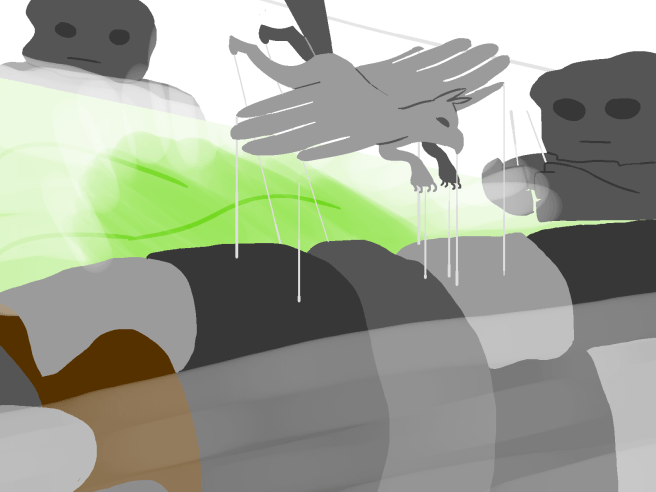
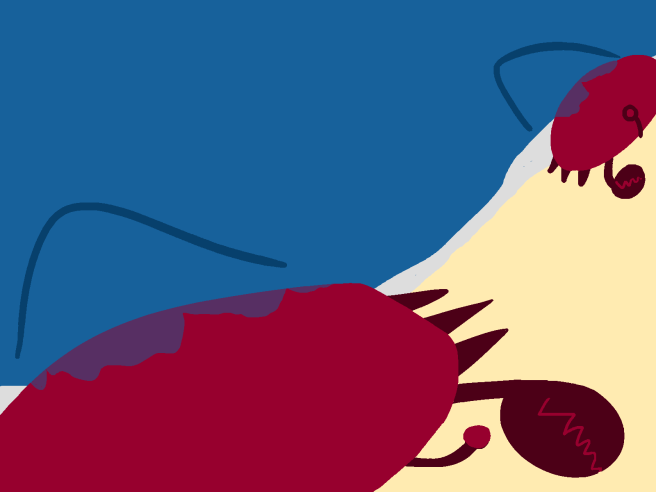
Five gnomes puppeted figurines under the model ocean. Two crabs crawled onto the coast; the figurines were the size of ordinary crabs, so the crabs they represented must have been meters across. The crabs dominated the left and right sides of the board. They left deep trenches where their abdomens scraped the sand.
pict17

“My longbowmen take aim.” Jennifer’s soldiers nocked arrows while the gnomes carved the crabs’ path to the tower. Only after the crabs advanced across two thirds of the table did Jennifer raise a hand to pause the action. “Open the tower.” The gnomes pulled open the tower’s heavy wooden door.

Five figurines trotted out, dark steeds with fiery manes. Their jockeys wore fireproof leather. Aria whispered to Homer: “I wonder how many favors she had to cash in to get those Night Mares. They’re a pain to snatch from the wild wastes.” The gnomes placed orange spikes behind the horses to represent the fire they left in their path. “Good move, though. Seafolk hate fire. It’s alien to them.”

Jennifer crossed her arms. “My Night Mares crisscross the beach. Now I control the table.”

pict18.png

Sir Hitode sucked his translator’s feet. “The crabs continue to advance.” The crabs encroached on the tower, pincers snapping.

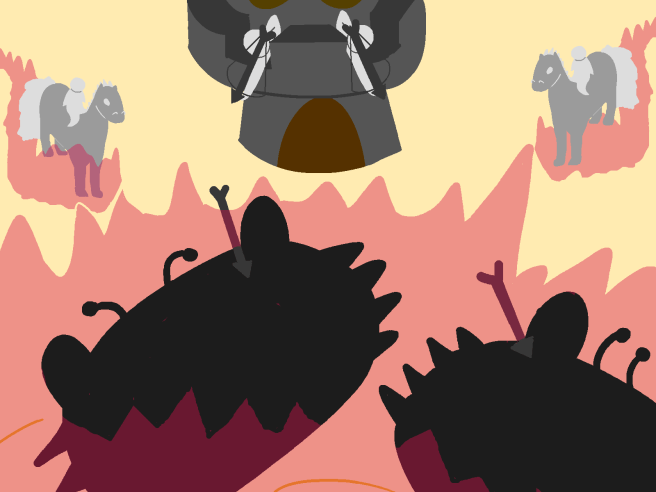
“The crabs are now close together,” said Jennifer. “My Night Mares circle them at a safe distance, like this.” She waved her finger around the crabs. The jockeys made their mounts trap the crabs in a ring of fire which threatened to fry them in their shells. “Now we finish crisscrossing the beach.” The Night Mares drew long lines of fire across the sand. “My longbowmen fire on the crabs, aiming for eyes and joints.”

Bowstrings loosed arrows. Hitode gripped his translator’s hips. “The crabs flee into the fire.” Gnomes pushed the crabs into the flames. Crab legs spasmed as they cooked.
pict19

Jennifer squinted at the burning crabs, blackened and scorched. “Cease fire,” she said, as if to her men.

Neither commander gave orders for two minutes. Jennifer’s jockeys made their mounts set the whole beach ablaze. The audience murmured, except the elves who communicated with pheromones.

The sea star switched which arm he used to wrap his gnome’s legs. “Sir Hitode would like to advance the table ten hours.”

“Fine,” said Jennifer. “My Night Mares keep the fires burning.”

Gnomes linked hands in a circle to corroborate. Then they stepped onto the table to demonstrate the passage of time at high speed. The crab carcasses crisped and fell into the inferno. The model ocean elevated as the tide came in. Two tracts of water rushed up the beach. “The crabs carved trenches. These trenches now flood.”
pict20.png

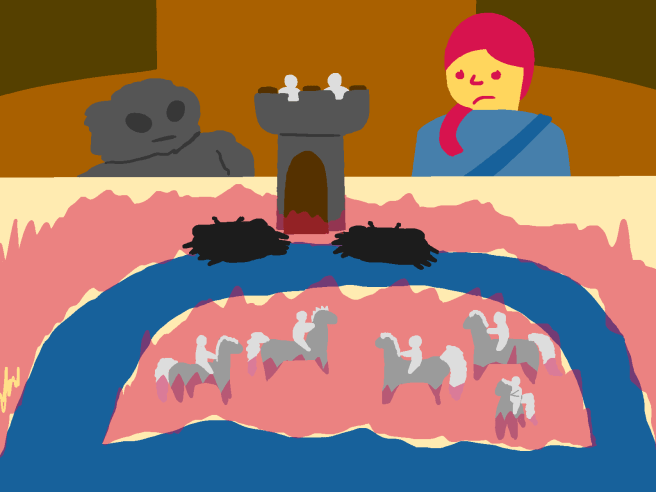
The crabs’ paths made a horseshoe lagoon. Jennifer’s Night Mares were stranded on a semicircular island.

“Sir Hitode advises his challenger not to indulge in pride,” said the sea star’s gnome. “He knew you would use Night Mares when you arrived riding one. Seafolk advance through the newly made channels.”

The silhouettes of seafolk squads swam toward the tower. When they met in the horseshoe’s center, Jennifer raised a hand. “I figured you’d spy on me, and I knew you’d alter the terrain to trap my troops. So I came prepared. Release the barrels!” Her longbowmen rolled barrels off the top of the tower. The barrels spilled gallons of flaming oil over the water.

pict21.png

The sea star pulsed. “Seafolk lift their net!” From the oil, two long metal poles protruded. The poles held a net between them. “Seafolk retreat to the ocean.” The poles fled along both sides of the horseshoe. The net caught jockeys and flung them into the fire. Horses fell to the ground, snapping femurs.

pict22

“No!” Jennifer pointed to her remaining riders. “My jockeys try to vault the trenches.”

“Risky move,” whispered Aria. “Night Mares don’t do well in water.”

Only one steed managed to make the leap, landing safely on the sand.

Others crashed against the opposite bank and fell into the water. These Night Mares flailed, howled, and melted, making the water boil, killing their jockeys. The poles sped seaward, dragging Jennifer’s straggling horsemen through fire into the ocean.

pict23

“The game is over,” announced a gnome. “The human has two longbowmen and one Night Mare with jockey surviving. Sir Hitode lost two giant crabs.” The gnomes held each others hands in a circle to calculate results. “Both commanders dealt damage, but neither can claim victory. To each side, three points.”

The crowd applauded. Emperor Shobai’s maw released bubbly chuckles.

“The next match commences shortly.”

“Not bad, kid,” said Aria to Jennifer as she sat with her and Jameson. Homer and Quattuor exchanged brass cards while more gnomes prepared the table. “Where’d you get so many Night Mare jockeys?”

“I know them personally,” she answered. “They’ll be sad to hear they’re dead, but I’ve got plenty more where they came from.”

“That’s the spirit, kid.” The seafolk’s side of the table was a clear ocean, but the beach gave way to rolling grassy hills on Homer’s side. “Homer’s fighting Ebi Anago. Do you know him? I can’t keep track of seafolk.”

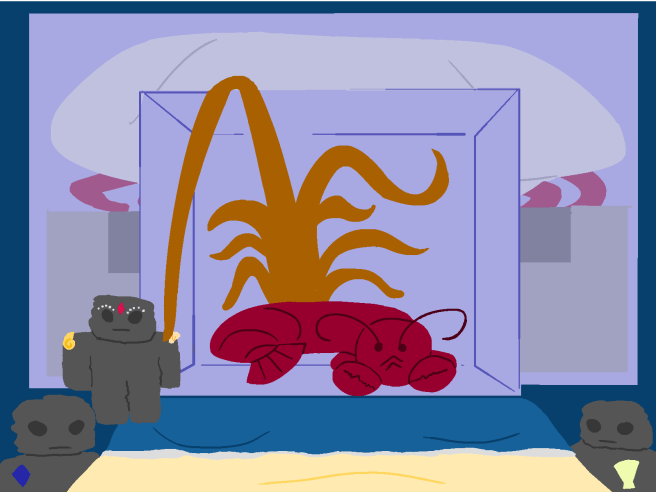
“He’s Emperor Shobai’s nephew, next in line for the throne.” A new glass tank ascended into view. Within lay a lobster at least two hundred pounds with antennae two feet long. Its tail split into eight slender limbs like electric eels. “They say each of its tails has its own brain,” whispered Jennifer.
pict24

The dwarfs behind them grunted. “Nine brains?”

“Nine brains.”

Jennifer turned to see the dwarfs, but quickly turned away. “I didn’t think dwarfs were allowed in civilized lands.”

“The dock’s neutral.” One dwarf spat mud. “We’re here to watch.”

“Minotaur’s broken,” said the other. It pointed to Homer and drew his scars. Aria wondered how they knew that without eyes. “Shameful.”

“Appalling.”

“Degenerate.”

Aria folded her arms. “You’d better watch him close, because that minotaur’s gonna win the tournament and beat your champion back into the ground.”

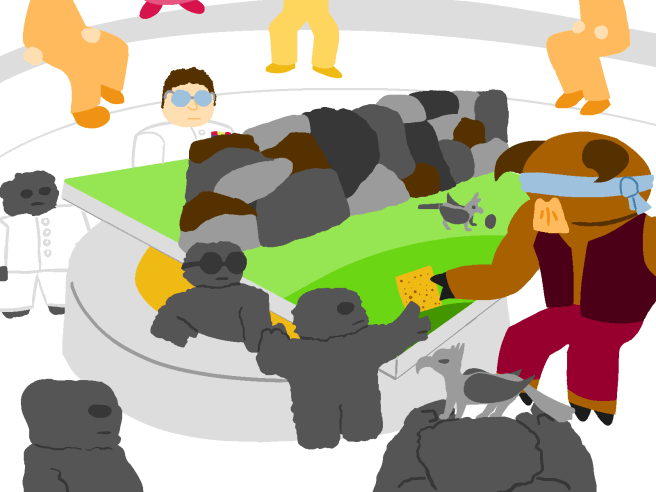
“With a red dragon?” The dwarf pointed to the table. Homer had painted Scales’ figurine bright red. Flames seemed to leap from its spiked tail and horns. On either side of the dragon, three archers prepared their bows.

pict25

“I thought Scales was a—” Jameson grunted when Aria elbowed him in the ribs.

“Red dragons are perfect against seafolk,” she said to the dwarfs. “When they’re out of the water, they’re terrified of fire. Look, Ebi Anago is having second thoughts!”

The massive lobster dangled an eel-like limb over the tank wall to to the translator-gnome’s shoulder. “The esteemed Ebi Anago says seafolk intelligence was unaware of a red dragon in human lands and would like verification on this game piece.” More gnomes clattered their fingers together and rechecked the dragon’s brass card. They confirmed the brass was genuine. “Ebi Anago would like to alter his army. Would the challenger allow this if he, too, is given the opportunity?”

Homer folded his arms. He must have picked it up from Aria. “Ess.” Without looking from the lobster, he placed a minotaur’s figurine on the table.

Jameson leaned towards Aria. “Is he playing his own figurine?” She nodded. “He could die!” She nodded again and bit her lip.

“Ebi Anago would like to congratulate his opponent before the match,” said the translator. Three gnomes arranged figurines under the model ocean. “He says he remembers centuries ago, when Emperor Shobai had to demand seafolk-inclusion in the treaty signed by humans, elves, and dwarfs to limit bloodshed to table-war. He acknowledges you as a fellow intelligent creature.” The lobster’s beady eyes locked with Homer’s dark goggles. Ebi Anago snapped his claws. “Ebi Anago says the minotaur may choose to take the first move or second.”

Homer pointed to his dragon figurine and tapped a message to a gnome. Clever gnomish handiwork made the red dragon fly, supported by almost invisible scaffolding.

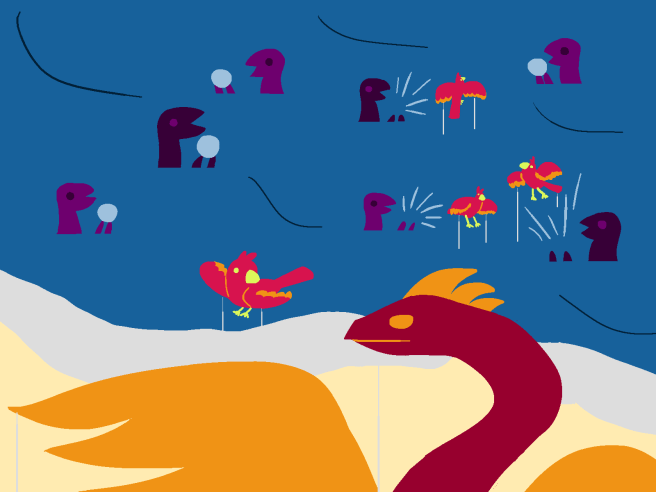
Ebi Anago’s eight tentacles flopped over the tank wall. Each tapped a message onto a different gnome’s shoulder. Aria recalled Jennifer’s warning: each of the tentacle’s brains had something to contribute to the tactical discussion. The gnomes showed how thirty seafolk soldiers like eels surfaced on the ocean. Each eel figurine held a glass ball like a bubble.
pict26.png

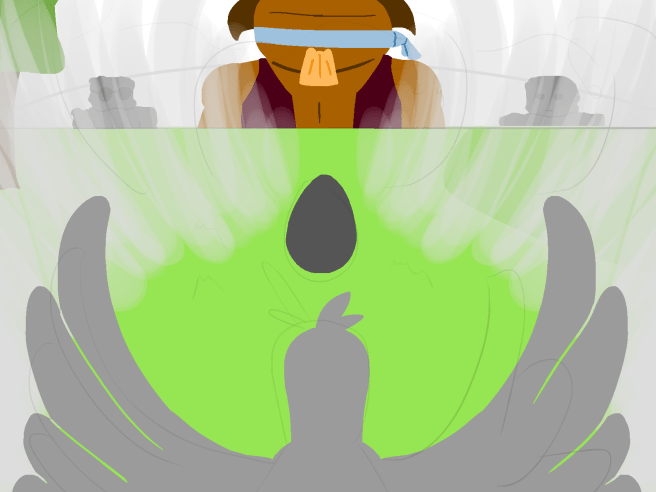
The bubbles popped; there was a bird-figurine in each one. The flock flew six feet above the table with the eagerness Aria expected from birds kept in bubbles underwater. Ebi Anago spoke through his gnome: “Ebi Anago says that having owned dragons himself, he knows they are easily distracted by movement and color. These parrots will control your dragon.” Parrot-figurines spread around the air above the table, and the dragon’s neck twisted and turned to follow them. The crowd murmured.

Homer tapped the figurines of his archers. Said the gnomes, “these skilled archers are able to strike down over half of the distracting parrots.” They carried away dead figurines.

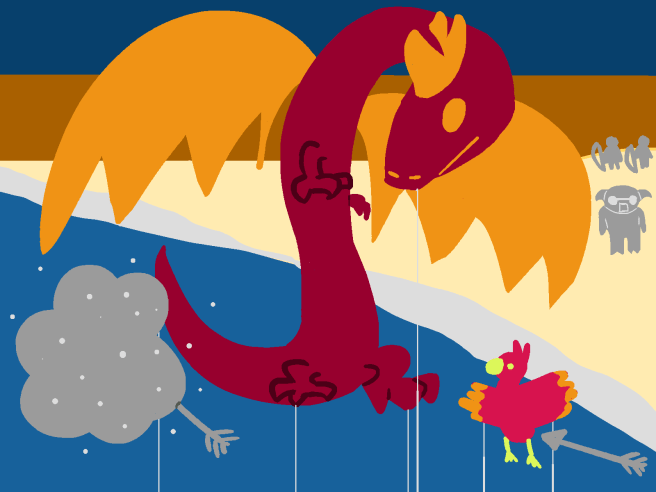
Ebi Anago contacted his translator. “These parrots were stuffed with glitterbombs.” Gnomes procured, from under the table, perfume bottles filled with glitter. A few puffs showed how the shot birds exploded into shiny clouds. The elves in the audience oohed and aahed. “The dragon is incapacitated in wonder.”
pict27

Homer raised one hand to pause the table. He pointed to one of his archers in particular. A gnome checked its brass card. “Instead of arrows, this archer has an elvish cricket in his quiver. He holds the cricket in the air.” The smell of the cricket made Scales’ turn its head. “The dragon returns to Homer’s side of the field.”

While the gnomes showed how the dragon demurely begged for its food, Homer pointed to his dark goggles and tapped a message on a gnome’s shoulder. That gnome nodded and made Homer’s figurine approach the dragon. The gnomes carefully removed Homer’s figurine’s goggles and put them on Scales.

pict28

Homer pointed to Ebi Anago’s side of the table. This time the dragon flew through the clouds and parrots undistracted. It breathed deep and opened its jaws for a mighty exhale.

“The seafolk dive underwater before the dragon breathes fire,” said Ebi Anago’s translator. “As the ocean boils, they will take only minor injuries and fire projectiles from the seafloor.”

“The dragon unleashes his freezing breath,” said the gnomes. They replaced the model ocean with ice. “All the seafolk instantly freeze to death. Homer has won the match with no casualties. Five points to the minotaur, no points to the seafolk.”

pict29

Homer took his dragon’s figurine and rubbed it on his fur. The red paint smeared away. Scales, the ice-dragon, shined in the moonlight to impressed cheers of disbelief from the audience.

“Homer! His name is Homer!” Aria’s cheers rose above the rest. “I trained him!”

Homer luxuriated in the audience’s approval. He filled with a kind of warmth he’d never felt before. A gnome tugged his elbow. “A gift from Prince Ebi Anago.” It was a paper envelope.


On the return trip to human lands, they stopped for the night among quiet hills. Homer removed his goggles in the dark. Even without them, he had difficulty seeing the stars. Labyrinths demanded nearsightedness. To Homer, everything more than thirty feet away was a blur.

The unmistakable weight of a brass card gave the paper envelope some heft. The envelope was sealed with wax impressed with the image of Emperor Shobai.

pict30

He broke the seal; indeed, the envelope contained only a brass card. He tried reading the gnomish dots himself. He could tell the brass card was a small animal. It could fly. It was bright red. It was well-trained. This was one of Ebi Anago’s parrots. But there was information on the card which Homer couldn’t parse with his fingertips. Recalling the match, he realized some of the card’s dots represented the glitterbomb the parrot was stuffed with, but there was something else, too. The parrot was fed some kind of plant.

Homer turned to carriages. While Aria, Jameson, and their driver slept in the carriages, Quattuor stood completely still staring at the moon. “Guadduor.” Homer tapped his shoulder.

The gnome’s fingertips twitched as if sleep-talking. “Homer,” it said. “I am conserving energy. What do you need?” Homer gave him the parrot’s card. “This is one of Ebi Anago’s parrots.”

“Bland.”

“Bland?”

Homer pursed his lips unnaturally . “Pland.”

“Plant! Yes, the parrot has eaten a plant called lillyweed. It grows in swamps between elven and dwarven territories.” Quattuor returned the card. “How interesting. Lillyweed is toxic to ice-dragons, but not red-dragons. Ebi Anago must have known the whole time.”

Homer furrowed his thick brow at the back of the card. Gnomish dots were engraved: “When you revealed your painted dragon, I thought I’d won. Your dragon couldn’t freeze my parrots without revealing your deception; you’d have to shoot them with arrows or let your dragon eat them, and both, I believed, would win me the game. But the better player won.

“If you ever need help from seafolk, give this card to a gnome and have them take it to the core to contact me.

“Ebi Anago.”

Next Chapter
Commentary

Expansion, Contraction, and Failing Faster

In Homer VS the Sea-Thing our up-and-coming minotaur wins his first match of the tournament. Maybe Homer will fight the dwarven champion to keep dwarfs bound to the treaty that limits bloodshed to table-war.

This chapter used to be 9,000 words long, and now it’s half that. Taking the effort to cut it in half hopefully improved the clarity and pacing. I can’t speak for every writer, but I’m sure we’ve all had the experience of having a High-School professor setting a page-limit (“between five and six pages” or something like that), and having trouble condensing all our ideas into so much text. I would argue this issue is fundamental to writing and, in general, creativity itself.

At UC Santa Barbara, I was a mathematician in the College of Creative Studies. I took the College’s first actual class on creativity where we learned how the creative process often follows a pattern of expansion and contraction. In the first phase of solving a problem, we connect disparate ideas to produce a variety of solutions. In the second phase, we examine those solutions and choose the best to consider further. We repeat until satisfied, alternating periods of generative spit-balling and selective reconsideration.

You can’t shoot down a bad idea unless you have the idea first. You can’t delete text until you have text to delete. First write it down, then get it right. It’s a lot easier to say “this scene didn’t turn out like I wanted” than “how should this scene go.” Fail faster.

For example, I’d like to recall the process of writing and rewriting this chapter.

First I expanded: I wrote 206 pages about a minotaur who plays war games. I never knew what would happen next in the plot, but I hit a nice rhythm and let plot points surprise me.

Then, in the process of rewriting, I arrived at this chapter. I copy-pasted 9000 words from the original file into a new file. I skimmed the chapter as it was, and, with the benefit of hindsight, it was easy to notice plot points which were never important to the story, or scenes which could be cut. The table-war between Homer and Ebi Anago was near-fatally convoluted (I didn’t know how I wanted Homer to win, so I included everything I could think of), and I surgically extracted hundreds of words to save it. In total I contracted the text by a third.

Then I expanded again. I knew eventually Centaurs would be important to the plot, so I added a scene where the gang passes through inspection entering the wild wastes.

Then I contracted again. I read the section more thoroughly and cut unneeded words and sentences. Sometimes I switched sentence order to ease the transitions from subject to subject.

This is really just a pretentious way of saying that when you edit text it can only get longer or shorter, but I still appreciate the notion of expansion and contraction. It’s a license to put words on the page even if they’re not perfect right away, knowing that you’ll circle back to beat them into shape later. It’s a license to cut anything with impunity, knowing if you’re overzealous you can fill in the gaps on the next reread.

Anyway, I hope your NaNoWriMo goes well, if you’re into that. Fail faster, fix it later!

Next Chapter
Table of Contents


Homer VS the Human

(This is part four of an ongoing series starting here. So far, in a world where war is replaced with board-games, former champion Aria Twine has discovered a minotaur with a talent for table-war. Homer the minotaur will become a royal commander if he can beat Queen Anthrapas’ best player.)


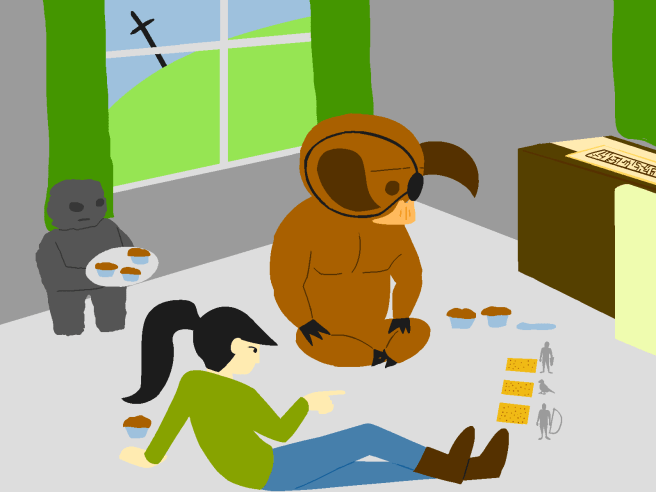
Homer was glad to have a room in Queen Anthrapas’ castle, but it wasn’t built for him. Overnight, the queen-sized bed-sheet tangled in his horns and brambly fur. The mattress would be huge for a human, but Homer’s legs still draped off the edges. He’d spent most of the night sleeplessly drawing mazes at a hard mahogany desk.

picta.png

“Wake up, Homer!” Aria threw open the window-blinds. Homer shielded his eye from the sunlight. “We’ve got to train hard before your match tomorrow morning. Quattuor, bring us a hearty commander’s breakfast.”

Quattuor the gnome bowed and left the room. When he returned with a platter of muffins nicked from the commanders’ dining hall, Homer and Aria were pouring over square cards made of wood and brass.

“I’ve never met Harvey, but he’s a royal commander, so it wasn’t hard to find logs of his games. The guy has textbook human strategies—lots of trained troops in formation.” Aria laid out some cards. “This card here is a falconer. This card is his falcon. This soldier fires arrows quickly, but this soldier fires arrows accurately. Knowing how and when to use these combinations makes Harvey a reliable table-war champ.”

pictb.png

Homer’s fingers read a wooden card’s markings. “Rrrd.”

“Wood,” agreed Aria, “not brass. Brass cards are official, wooden cards are copies. Hobbyists buy ’em to recreate historical matches, or just play around. That’s how I got my start as a kid. We can use wooden cards for practicing.”

“Rrrd,” said Homer again, and he give Aria the card.

“Bird? Oh yeah, that card’s the falcon.” Aria considered the cards she’d brought. “Harvey uses a bird-eye-view to advise his archers. To beat him, we’ve got to beat his birds. Let’s go to the hobby-shop for a test run.”


The bystanders in the capital’s local hobby-shop couldn’t stop staring at Homer and Aria. To placate the queen, Aria had made a tailor sew pants and a vest for Homer’s odd frame. Homer found the clothes constricting, but the hobby-shop’s dim lighting soothed him.

“Ignore the geeks, Homer.” Aria dumped iron figurines on the table. “Quattuor, gather more gnomes to help set up the map.”

Quattuor jogged between twelve table-war boards, each officially twenty feet square. The other tables were either empty or held a war paused mid-battle as all the hobbyists crammed around Homer and Aria to gawk at both in equal measure. The hobbyists ranged in age from eight to eighty.

pictc.png

Aria sorted her figurines. “You dweebs can watch, but don’t go blabbering, okay? We’re only here because we can’t train in the castle, or Harvey might see us.” The crowd murmured when Homer looked through his cards, some wood, some brass.

Quattuor returned with two more gnomes. “I’m afraid, Ms. Twine, we cannot prepare the map we’d discussed. Only unofficial hobby-maps are appropriate here.”

“Hmph.” Aria folded her arms. “I’d hoped to recreate a map Harvey’s been sparring on; I read about it in a hobby-newsletter. There’s gotta be a similar hobby-map.”

A teen in thick glasses pushed his way to the front of the crowd. “Use High Wall.” His glasses slid down his nose, and he sniffled like he’d had a cold all his life. “Harvey himself said the closest equivalent was the map High Wall.”

“Alright, Quattuor, High Wall.” The gnomes scurried over the table. “Have you got your figurines, Homer?”

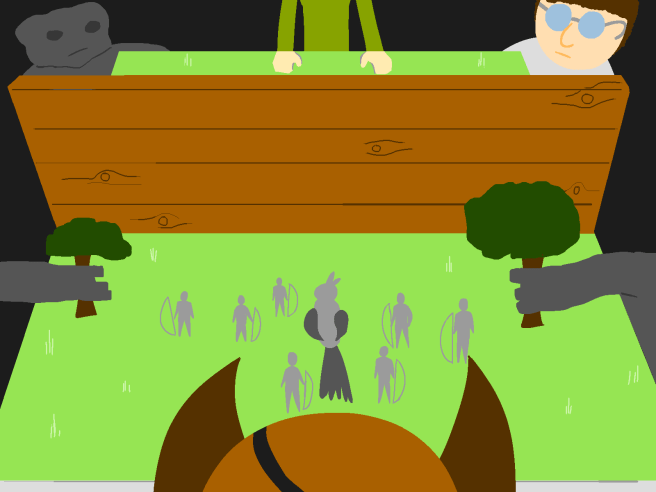
Homer shook a bag and figurines fell from it. “He’s got real figures,” whispered someone in the crowd. “Even I can’t afford real figures.” Homer gathered his figurines so the gnomes could finish the map. Quattuor stuck tiny trees to the table. The second gnome crawled across rolling a grass mat. The third gnome arranged wood planks into a four-foot wall dividing the table. The map was swiftly finished.

“Eeugh.” Aria grimaced. “Stock trees? A grass mat? Wood planks? I forgot what I used to put up with in hobby-shops. Lay out your troops, Homer, like we planned. I’m setting up Harvey’s field exactly as he would.”

“He wouldn’t do that,” said the teen in thick glasses. “Harvey always chooses his army based on his opponent’s. He studies them beforehand.”

“Shut up, fanboy.” Aria set up her figurines. Her approximation of Harvey’s army was a handful of archers behind four falconers. As Queen Anthrapas’ reigning champion, Harvey would have the first choice of game-pieces from the royal collection and claim the most skilled units for himself. Homer would be left with a crowd of inexperienced longbowmen and Aria’s secret weapon: the royal beast-master’s griffon.

pictd.png

“Harvey will have the first move,” said Aria. “He’ll send falcons over the wall. Their surveillance provides Harvey’s units with information about your army’s position.” The gnomes picked up the falcon figurines and flapped them over the wall. “Remember, just because you and I can see the whole table doesn’t mean our game-pieces have the same awareness. A little direction gives Harvey’s archers an advantage on this map, even against your more numerous longbowmen.”

Homer raised one hand to pause the table. A gnome put his hand to Homer’s and they communed with gnomish finger-taps. The gnome scurried over Homer’s longbowmen to the griffon’s figurine. Using sophisticated hinges, the gnome could make the figurine flex and spread its wings like a real animal.

picte.png

“Where’d you get that?” asked the teen in thick glasses.

“I know the royal beast-master,” Aria said smugly. “He got that griffon so recently, he hasn’t even had it brassed yet. He’s brassing it at my request.” Homer’s griffon easily snapped the four falcons out of the sky. Homer gestured at his longbowmen, and the gnomes showed how they volleyed a random hail of arrows over the wall. “Harvey’s archers will return fire, but with no information, you’ll win out of sheer numbers. Your griffon can fly over to kill any stragglers.”

The hobbyists chuckled among themselves. “Aria Twine’s taught a minotaur to play table-war, and it can win!”

Aria packed up her figurines. “So, fanboy, whaddya think now?”

The teen in thick glasses surveyed Homer’s figurines. “Harvey would see this strategy a mile away.”

She scoffed and rolled her eyes. “Oh yeah? How?”

“Harvey is me.” He thrust a hand at Homer. “Shake, boy. I look forward to our match.”


Bright and early the following morning, Aria brought a platter of muffins from the commanders’ dining hall to Homer’s door. “It’s time. You got pants on?”

Homer’s room was silent.

“Huh.” Didn’t Homer know this match was too important to miss? Aria pounded the door. “Homer, come on!” She pulled the handle.

Homer’s room was dark. Heavy blinds blocked out the windows. The odor of fur was nose-crinkling.

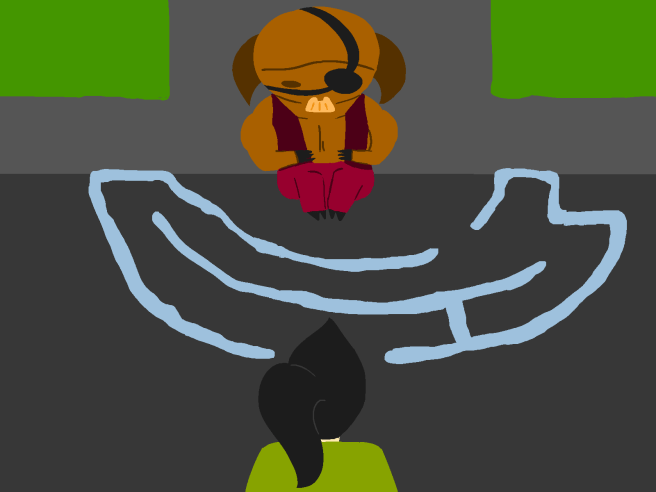
Aria barely saw Homer sitting against the far wall with his head tucked between his knees, shivering in the dark. He’d rolled up his bed-sheets and arranged them in a maze with him in the center.

pictf.png

Aria stepped over the maze ‘wall,’ but Homer brandished his horns at her. She backed up and walked around the bed-sheets to give him a muffin. “I visited the royal beast-master. Harvey claimed the griffon’s brass card as soon as he knew we’d need it. He won’t let this go down easy.”

Homer nodded.

“The beast-master give me all his leftover brasses. Let’s talk strategy over some muffins, okay?” This didn’t rouse the minotaur. Aria sighed and sat next to him. “Twelve years ago I was in your exact position, more or less. I was an orphaned table-war geek living on the streets. I won hobby-tournaments for bread-money. Word got to Queen Anthrapas and she offered to make me a royal commander if I could beat her best champion. Before the match, I was too nervous to sleep or eat.”

Homer nodded.

“If I lost, I’d go back to the streets. If I won, I’d live in royal luxury. And I won. But let me tell you, being a royal commander wasn’t any less stressful than living on the streets. I was shipped around the continent, and if I ever lost at table-war, there was hell to pay. But whenever you want, you can walk away from that life. You can go back to your labyrinth. But you’ll only have the opportunity to make that choice if you win, and you’ll have a clearer head if you eat some breakfast.”

Homer chewed the muffin.

pictg

“Atta boy, Homer. Stand up. Watch your horns.” She led him through the labyrinth ‘corridors’ and opened the door.

Homer covered his eye and turned away from the light.

“Too bright?” Aria sighed. “Labyrinths are dark, I guess. The surface just isn’t built for you. Just do your best, Homer. Can you do your best, for me?”

After a few deep breaths Homer returned to the door, squinting.

“Show them what you’ve got.”


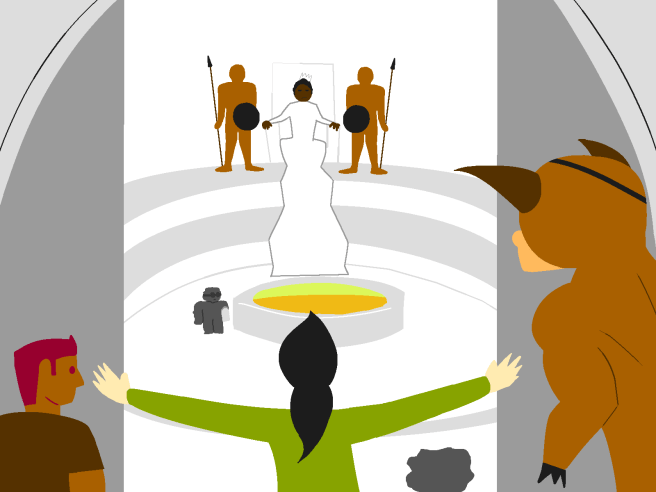
The queen’s throne room had become an auditorium. Representatives from human provinces sat circling the central pit of lava, which was covered with a table-war board. Queen Anthrapas gestured for Aria when she walked in, but Aria pointed to her minotaur. “Tell it to Homer. I’m just here to watch.”

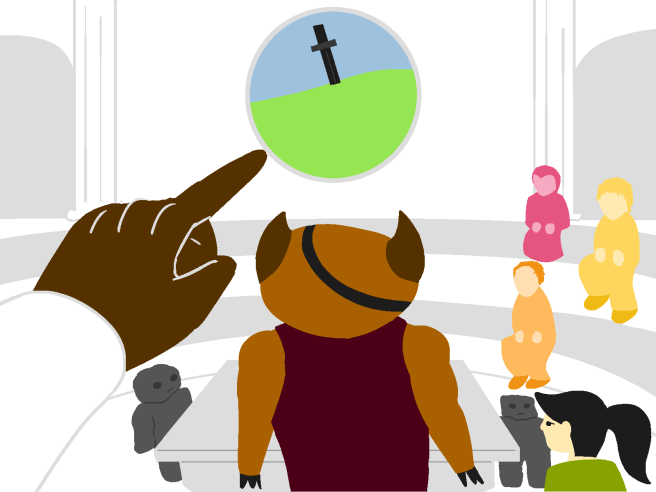
“Homer, then. Approach.” Homer’s hooves clopped on the marble steps to the throne. The audience quieted to watch him bow. “Stop there. Turn around.” Homer turned and squinted in the light of a circular window. The window’s light was split by the Great Sword in the distance. Anthrapas coughed to prepare a speech. “On this throne, I can’t help but see that sword. It reminds me of my duty to protect humanity by restricting war to the table. If you want to be a royal commander, you must devote yourself to that cause.” With help from her guards, Anthrapas managed to stand. Several steps above Homer, she was barely taller than him when she straightened her back. “The dwarfs are reneging on the treaty which limits bloodshed to table-war. We, the elves, and the seafolk have one chance to choose a champion. That champion must defeat dwarfs on the table and thereby restrict them to it. Homer, if you’re not fighting to take down the threat represented by that sword, leave.”

picth

Homer nodded.

“Gnomes, prepare the match.”

Ten gnomes—including Quattuor and Septem Dicem, who still wore goggles for working the lava pit—pushed two chairs to the table. Aria poked Homer’s belly. “That’s your cue.”

“Twine!” Anthrapas collapsed back into her throne. “Get away from him and sit down. You’re not giving any pointers.”

Aria curtsied sardonically and sat in the front row.

The gnomes directed Homer to sit in the closest chair, where the circular window shined directly in his eye. Homer heard more people join the audience. Most were human; Homer recognized some of their scents as spectators from the table-war hobby-shop. A few high elves also sat in to watch the match, dragging their shorties behind them.

“I apologize for tardiness, my liege,” proclaimed Harvey, with a bow. Harvey marched to his seat wearing thick reflective glasses and a chest of shiny metal badges on a clean white suit. The outfit reflected light in all directions. With this blinding distraction, Homer fumbled his figurines and brasses.

Sir Jameson sat beside Aria. “I’m not happy you went to the hobby-shop alone. You know I’m supposed to escort you around the capital.” He took stock of the table. “Your minotaur seems ill.”

“Harvey must’ve realized Homer’s sensitivity to light,” Aria whispered back. “He’s dressed to disorient my minotaur.” The queen’s gnomes read Homer’s brass cards. Harvey let his own personal gnome organize his table-war materials; the gnome wore its own white suit.

“Everything is in order,” said one of the gnomes. “The match may begin.” Anthrapas nodded.

“Hold on.” Aria stood. “O Queen, don’t you remember our agreement? I said my minotaur could beat Harvey… blindfolded.”

Anthrapas shook her head. “There’s hardly reason for that.”

Nevertheless, Aria made Jameson give Quattuor his handkerchief to pass to Homer. Gnomes waggled their fingers at Homer to instruct him on how to tie a blindfold. He didn’t understand why, and when he looked back to Aria, she could only harden her expression to give him courage. He tied the cloth around his head so it covered his good eye. Suddenly his world was dark. He slipped off his eye-patch.

picti

Harvey joined the audience’s soft applause. He arranged his figurines on the table’s edge. “If you’re handicapping yourself like that, it would be shameful not to throw you a bone. As the challenged party, I’ll choose the map for our match. Would you like to choose the weather?” Homer hadn’t seemed to hear. He pointed his horns to every corner of the room, blindly listening to the audience murmur. “I’m choosing a map I’ve studied intensely: the border of the wild wastes where centaurs have built a wall. The area is sunny today, but there’s often rain or snow in the winter. Any moderate weather should be appropriate.”

Homer felt for a gnome’s hands and declared his choice of weather with finger-taps. Then all the gnomes climbed onto the table to build the map. They professionally sculpted humanity’s grassy hills on Harvey’s side, while Homer’s side gradated to the taller, darker grasses of the wild wastes. Dividing the sides was a wall of irregular boulders and stones.

pictj

Aria furrowed her brow. “Centaurs built a wall on the border of the wild wastes? Why?”

“You’ve been living in a shack for ages, you know,” said Jameson. “The creatures in the wastes have been unruly lately.”

When they finished the map, the gnomes hopped off the table. They opened a small wooden box of white powder and shook it over the map. The powder made a white cloud that obscured the terrain like fog.

pictk

“Hmm.” Harvey considered the fog while selecting game-pieces. Homer felt the cool fog with his hands. Through the fog and the wall, neither Homer nor Harvey could see their opponent’s pieces. “I’m ready to begin,” said Harvey. “My opponent can have the first move.”

Homer waved his hand.

“The minotaur passes the turn to you, sir.” Harvey shrugged. He pointed into the fog and then pointed over the wall. Two gnomes scrambled over the table to maneuver a figurine. When the figurine breached the fog to fly over the wall, Homer knew it was the griffon. Two more gnomes constructed scaffolding to hold the griffon’s figurine aloft. Its wings were stretched mid-flight.

“I’ll admit,” said Harvey, “spying on your practice-match might have been unfair. But you’ve still helped humanity: you’ve shown me griffons are more robust than falcons. You’ve strengthened my intelligence-gathering strategies.”

pictl

Harvey’s griffon landed on Homer’s side of the table. Its wings blew the fog away to reveal an egg. The egg’s figurine was the size of a chicken’s egg, so the egg it represented must have been the size of a man’s head.

pictm.png

The gnomes left the table to join hands.

“The griffon should return to my side now,” said Harvey. “With the griffon’s guidance, my archers can pinpoint that egg with arrows.”

“Your griffon isn’t coming back,” said Harvey’s personal gnome. He bowed before the queen. “Ma’am, officiating this quandary may require connecting to the core.”

Queen Anthrapas waved her hand.

Gnomes removed the table to uncover the lava pit. Homer sat back before his fur caught fire. Septem Dicem, wearing dark goggles to protect his eyesight, stepped waist-deep into the lava. “The collective consciousness of gnomes at the core has provided a solution to our problem.” Just as quickly, the table was replaced to seal the lava underneath. A gnome brought a new brass card to the table and chiseled a fresh grid of holes. “We apologize for the wait.”

Homer took the card. Another gnome made him a new figurine out of gnomish clay: a second griffon almost twice the size of the first. Homer grunted in approval.

pictn.png

Harvey puzzled over the second griffon, but waved the problem away. “My loyal griffon will attack the newcomer.”

Instead, the gnomes brought both griffons to Harvey’s side of the table. “They attack your archers,” said a gnome. “These men are dead.”

Elves in the crowd giggled. Harvey covered his mouth. “My surviving archers open fire on both griffons.”

Gnomish fingers clacked. “The griffons eviscerate your archers and return to their egg. There are now no units on the board accepting orders from either commander, so comparing the game-pieces each side has lost in battle, this is technically a victory for the minotaur.”

pictp.png

While the audience laughed, Aria stood and clapped. “Homer! Whoo!”

Harvey marched around the table. “What did you do?”

Homer gave Harvey the brass card the gnomes had chiseled for him. “Grrffrn.”

“I had humanity’s only griffon.” Harvey realized his mistake while his gnome read Homer’s card. “But you had the griffon’s egg, so—”

“When your griffon saw Homer had its egg, it lost allegiance to you.” Aria marched to the table with her hands on her hips. “Your griffon called for its mate and they slaughtered your squads.”

“But…” Harvey pushed his glasses up his nose. “What are the chances its mate was so nearby?”

“What if,” guessed Aria, “centaurs built that wall because humans recently barged onto the wild wastes and took a griffon? Wouldn’t it be natural for the griffon’s mate to be found near there?”

“We had no statistics regarding the egg’s father,” said Septem Dicem, “but using all available information, the gnomish collective consciousness at the core was able to estimate the strength of the egg’s paternal guardian.”

Aria slapped Homer’s back. “Good game! You made it look easy.”

“Hm…” Harvey ran his own fingertips over the brass card representing the male griffon. “Nice match.” Harvey extended a hand for Homer to shake. “It’s a pleasure to meet you, commander.”

Homer fumbled for Harvey’s hand. Aria untied Homer’s blindfold, but he covered his good eye to protect it from the light. “Still too bright, huh?” Aria took Septem Decim by the shoulder and removed the gnome’s goggles. With a little adjustment, they fit the minotaur perfectly.

pictq


Homer sat in the commanders’ dining hall chewing the edges of a muffin. He could’ve eaten the whole platter himself, but Harvey and some of the other commanders liked muffins, too, and Homer was willing to share.

“That’s Jennifer across from you.” Harvey pointed down the table with a fork. “She likes constructing fortifications right on the battlefield. The boy next to her is Thad; he’s here because his mom’s a noble. Don’t tell him I said that, though, or he’ll start taking my lunch money again.”

Beside Homer, Aria ate scrambled eggs and silently judged every other commander in the room. There were twelve humans, half in their teens, and one elf eating a private bowl of elvish mashed-up-insects-and-honey. Were these really Queen Anthrapas’ best commanders?

pictr.png

By announcing their intention to renege on the treaty, the dwarfs had issued a challenge. The dwarven table-war champion would fight the winner of a tournament between the humans, elves, and seafolk. The three races would each get four seats in the tournament, and Homer had secured his seat under humanity’s banner.

“We call the elf Sarah. I can’t pronounce her elven name. Sarah? Sarah?” Harvey waved his fork at the girl’s glittering eyes. “Sarah, what’s your real name?”

“Oh, no,” said Jennifer, “not at breakfast!” Sarah laughed. Her laughter released pheromones, producing a scent which conveyed her name in elvish. “Uuugh.” Jennifer pushed her plate away. “Gross.”

Sarah turned up her chin. “A species bearing live young instead of eggs has no right to complain about ‘grossness.’” Aria shuddered. Elves were weird. Homer sniffed the air. He’d never smelled a name before.

“Miss Twine, a letter.” Sir Jameson brandished a sealed envelope. “For Homer, from the queen.”

Aria opened the envelope while surveying the other commanders. Who would join Homer in the tournament? Harvey was a shoe-in, but who else? Surely Queen Anthrapas wouldn’t choose an elf like Sarah; the elvish queen’s pheromones could destroy any elf’s dependability. “Homer.” Aria tapped his shoulder. “I have good news and bad news.”

“Rr?”

“This letter officially seats you in the tournament. No turning back now.” Aria skimmed it again. “You might represent humanity in a match against the dwarfs. I’m jealous!”

Homer let the news sink in. Had he sold his labyrinth-life for muffins?

“The bad news: your first opponent is Ebi Anago.” Aria passed Homer the queen’s letter. “Seafolk.”

Next Chapter
Commentary

The Point

In Homer Vs the Human our minotaur protagonist wins a seat in an upcoming tournament by beating Queen Anthrapas’ champion commander, Harvey.

In my last commentary I talked about the “virtue wheel,” a method of charting a story’s characters to make sure they’re varied. If you want your story to have a point, character variety helps communicate that point.

But do stories need points? Or “themes” or “meanings” or whatever?

Nah. I didn’t write the first draft of The Minotaur’s Board-Game with a point in mind; I just liked minotaurs and board-games and writing. People can write stuff for a reason, or for no reason, or without even considering reason.

But, a point can make a story directed and streamlined. A point helps me, as an author, cut unnecessary prose. Since I believe stories should be as short as possible, a tool to help me trim is always welcome. So, the second draft of my story needs a point.

What’s the point of The Minotaur’s Board-Game?

I’m not sure yet. My opinion about the point will change by the end. But I found clues in my virtue wheel, so let’s start there! Three “virtues” which separate the characters in The Minotaur’s Board-Game are

  • Physical Strength
  • Intelligence
  • Political Power

I’d like to use these “virtues” to make a point about leadership and loyalty.

Board-games suddenly have symbolic meaning. The intelligent characters reduce the strong characters into game-pieces to control their physical forms. Meanwhile those intelligent characters are controlled by characters with political power, as if the real world is a board-game controlled by kings and queens. This makes the conflicts between individuals, nations, and races more abstract, distancing characters from the implications of their actions (is it okay to take a griffon from its natural habitat just to use its physical characteristics for a game-piece?). Even without real war, this isn’t exactly a Utopian environment.

The main characters, Homer and Aria, have a flawed relationship. Homer’s a sentient animal-biped who admires and trusts Aria, but she sees him as a pack-animal she can ride to greatness. Homer is stronger than Aria, and maybe smarter in terms of pure table-war talent, but Aria exploits him. Did Homer really want to fight Harvey? Would Homer prefer living in a labyrinth? Aria doesn’t care. She hardly seems to understand him.

The most powerful person we’ve met is Queen Anthrapas. She’s old and frail, but as queen of humanity, Anthrapas is imposingly unquestionable. Is it okay for her to manipulate her subjects to protect humanity from the threat of war? If so, does that mean Aria can justify exploiting Homer because she misses being a royal commander?

The human answer to this question won’t be the same as the elven answer. I want my elves to be weird and original; they’re insect-like, with a height-based social-system, lace wings, and pheromone-based communication. Their queen enforces loyalty and leadership chemically. They even lay eggs!

Homer will play table-war with seafolk next. Whatever’s up with them, you know their society will present a different commentary on leadership.

If you’ve ever read The Once and Future King, Merlin turns a young King Arthur into animals to show him different political ideologies. I recall ants, birds, and fish among others. Similarly, I hope meeting elves, seafolk, and dwarfs will teach Homer and the reader about different possibilities for the relationship between leaders and the people they lead.

To that end, I think each board-game should present a unique challenge related to the society proposing it. Homer must invent solutions reflecting his maturing ideology.

In his first match, Homer overcame dwarven siege weapons by setting skeletons on fire and flinging them with a trebuchet, immediately after Aria told him that using skeletons at all was a faux pas. As an animal, he’s naturally shameless, and in that particular scenario, shamelessness was enough to win.

In Homer’s second match, Harvey shows humanity’s tendency to exploit strength when he replaces his falcons with the griffon. Homer punishes him by understanding the deeper connections between animals. Maybe Aria taught Homer some sympathy for other species.

In Homer’s next match, what will the seafolk teach him? Follow to find out!

Next Chapter
Table of Contents

PS. In The Minotaur’s Board-Game, animals impact their environment. Scales the ice-dragon makes its surroundings chilly. Homer the minotaur makes mazes when he’s anxious. Humans seem to live in an infinite field of rolling hills, and it’s not clear whether they live there because it’s like that, or if it’s like that because they live there. Dwarfs eat mountains from under their own feet.

I think that’s another major aspect of the point. When two individuals play table-war, they represent their nation and their race. Whole world-views are in combat, and when land is ceded, it’s assimilated into the opponent’s mode of being. The infinite field of rolling hills represents humanity’s stability. If the elves conquered some hills, I’m sure forests would grow there and soon you could hardly tell it was ever human territory at all. Understanding how we shape our environment is instrumental to understanding ourselves.

Nations/races are almost characters in themselves. They’re like amoebas with political borders as their cell-walls, whose interiors are homogeneous terrain. In this view, Queen Anthrapas isn’t a mastermind playing games with subordinates; she’s subject to the national over-mind. The scattered weapons left from the war against demons are the only true symbols of power, representing violence which can smite civilizations. Before them, an individual’s strength, intelligence, and political power are meaningless.

Escape of the Lobsters

(I wrote this for a class at UC Santa Barbara. I think the prompt was “animal.”)


I scuttled across the sandy seafloor on ten legs. My front six legs had pinchers, and I used my largest, frontmost pinchers to eat worms and kelp. If I kept my eyestalks peeled I’d find unsuspecting mollusks to pry open. My mandibles chittered at the thought of slurping up a snail.

My antennae brushed chum, just rotting fish flesh, bones, and blood. I crawled in to eat my fill. My eyes rolled on their stalks in salty pleasure. My carapace bumped another lobster wandering the chum. Another lobster stepped on my antennae. At least a dozen of us scrambled over one-another. Whenever I escaped the tangle of crustaceans, a wooden barrier blocked me. How had I entered? How could I exit? More lobsters joined us through a mysterious one-way portal.

Our prison rose and the pressure of the deep lifted as we broke the surface; I felt like I would burst out of my shell. The other lobsters squirmed in defeat as we felt air for the first time. “Here’s the trap. Get the bands on ‘em!”

Two at a time, lobsters from the top of the trap were taken and returned. I did not see what happened to them outside. Finally I was pulled above the others. Two bipeds snapped my pinchers shut with rubber bands. I fell back in the trap. “Load ‘em into cargo.”
A bipedal brute hefted our prison down a staircase into a dark place. He dumped us in a barrel of brine.

The other lobsters panicked, and their wriggling churned the water. I hid against the bottom of the barrel and watched them all scramble for escape. Thankfully they couldn’t pinch me in their frenzy. Eventually some lobsters calmed and joined my utter stillness. Finally we all floated inertly in the cold brine.

I lost track of time until the barrel opened. Harsh light blinded me. “Get ‘em in the tank.” The barrel tilted. I tried and failed to swim against the current pouring me out. A hundred lobsters fumbled in the icy tank. I scrambled just to bump a glass wall.

A bipedal child tapped the glass and stuck its tongue at me. “Lookit! Like giant bugs!” I wanted to snap my pinchers to display dominance, but couldn’t open them. I retreated into the ice and surrendered to lethargic chill. 

Occasionally a biped behind the glass would point at a lobster. Those lobsters were taken to a boiling cauldron. I was not chosen. I reflected that I was smaller and more stationary, and perhaps therefore less attractive. I dug deeper in the ice to hide. In frozen slumber, I meditated on the problem at hand. Was this the doom of the arthropod? Was my eternal undying race fated to this? Ancient gray blood pumped through my thorax. My brainless nervous system recalled refinement from countless eons of ancestors.

“We’d better boil the rest first thing in the morning.”

The lights turned off and the din quieted. I crawled from the ice. Calling upon my lineage, I bent back and forth to crack my carapace. I crawled backward to shed my shell. Guided by the cosmos, my pinchers slipped from their hard gloves and escaped the rubber bands. I immediately turned to eat my armor. 

I stopped eating my armor when all that remained was the hard edge of an old pincher. That pincher’s edge easily cut the bands restraining a comrade. We both began freeing our neighbors. When every lobster was unbound, we piled against one side of the tank to make a slope of lobster bodies. I helped others climb and crest the glass wall. Each escapee gripped the tail in front of them with all ten legs to make a lobster-rope which the rest of us descended.

I made sure I was the last out. When my head poked above the water, I noticed a biped janitor standing dumbfounded at the sight of us. I pinched at him, and he flinched.

I led my lobsters into the sewers. 

But don’t get cozy, biped; we’ll be back for revenge.

Back

Homer and the Griffon

(This is part three of an ongoing project starting here. So far, Aria Twine has discovered a minotaur with a knack for the board-game which determines the fate of nations. He defeated a dwarf at table-war and won three mutilated gnomes.)


Homer watched the Giant Ax strike the distant horizon like a black lightning bolt from clear skies.

“Don’t worry, Homer. I won’t let anyone take you back to your maze.” Aria pat her minotaur’s head. By putting her legs over his broad shoulders and firmly grasping his horns, she could ride him almost like a horse. He carried the dwarfs’ three damaged gnomes and occasionally rocked them like wounded children. “Before we meet Queen Anthrapas, we’ve got to bring these gnomes back to their caves.”

picta.png

Homer still watched the ax. Where bandages once bound his wounds, now his scraggly brown fur refused to grow over thick scars. He adjusted his eye-patch so it didn’t rub his horns.

“Alright, Quattuor, where from here?”

The only gnome with a tongue shifted under homer’s forearms. “Fifty paces north and ten west.”

“Gnome paces, or minotaur paces?”

“Gnome.”

“Homer, five steps thatta way.”

Homer walked into a depression between grassy hills. Aria dismounted. The gnomes, once released, searched the grass by stomping with their stubby legs. “There is a sliding door,” said Quattuor. His one arm brushed long weeds to reveal a smooth, flat stone. “We are ill-equipped to push it aside.”

Aria knelt by the stone and slipped her fingers underneath. “Homer?” When her minotaur imitated her he easily slid the stone away. Beneath, stone steps led into darkness. Homer picked up the gnomes. His hoofsteps echoed down the stairwell. After a hundred dark steps, the staircase ended in a stone doorway. Homer squatted; his ten foot frame was too large for human portals, let alone a gnomish one. “Didn’t think of that,” muttered Aria. She ducked under the four-foot doorway. “How can Homer get through?”

“He will fit,” said Quattuor. “We know his dimensions from the marks on his brass.” Homer released the three gnomes to hobble through the doorway ahead of him. Then Homer put his horns through first, followed by his head and left arm. He scrambled through like a worm.

When he looked up, his claustrophobia evaporated. The gnomish caves had a vaulted ceiling supported by columns of rock like a ribcage. A flowing river of magma illuminated the area with a maroon glow.

pictb.png

The three gnomes crawled toward the red-hot river.

“Rrrr.” Homer reached for them. “Rrire.”

“It’s fine. They’re gnomes.” Aria held his fur. “Just watch.”

As they crawled into the magma, their iron chains melted from their ankles. Bits of gnome rock bubbled to the surface and sunk again.

“Hey, don’t cry.” Aria wiped tears from the minotaur’s cheek. “Give them a second. There, you see?”

A white hand reached from the magma, pulling up a shoulder and finally a head with perfect eyes like crystal balls. This gnome’s body was no longer textured like gravel, but like smooth marble skin colored like milk.

Two more gnomes pulled themselves from the river. Magma dripping from them hardened on the ground like little black pearls. “Thank you,” said one. “I am Unde Triginta.”

“Viginti Quinque,” said another. “You have already met Quattuor.”

pictc.png

Homer knelt to the gnomes and held them close despite still-scalding skin. “Told you it was fine.” Aria pat Homer’s back. “Anyway, you guys owe us a favor.”

“Gnomes owe no favors,” said Quattuor, “but serve anyway. How may we help you?”

“I want a gnome to train Homer to play table-war, and teach him gnomish, on our way to meet Queen Anthrapas. Quattuor, you have the easiest name to pronounce. Come with me.”

“Agreed.”


Each time the wagon rocked, Aria gripped its wooden frame until her knuckles were white. “Can your horse walk a little smoother?” She pressed her boots against the frame to help stabilize herself. “I get seasick super easy. I can’t take much more of this.”

“Humanity’s road to victory gets seasick?” Sir Jameson wrapped his horse’s reins around his hands. He’d removed his armor; apparently it was just for show during recruitment. Aria kept glancing at his biceps, wondering what they would look like depicted in the gnomish dot-language on a brass card. She once tried learning gnomish to read her own cards but the skill didn’t come easily to humans. “I thought more of you than that.”

“I wish. Sometimes standing up too quick gives me a head rush.”

pictd.png

Behind Aria, Scales circled in his cage. Behind that, in another wagon, Homer sat on a box hunched over Quattuor. After only a day the gnome’s marble-smooth skin had darkened and cracked. In a week he’d be rocky as any gnome. He passed Homer one brass card after another and arranged metal figurines on a drawing of a map. Homer felt each brass card with three thick fingers while he squinted at the figurine the brass card represented. Quattuor spoke in English while tapping gnomish against Homer’s massive palms. “The complete algorithms for running table-war are a gnomish secret, but can simulate reality to any degree of accuracy. Sometimes extra gnomes must be recruited to help simulate table-war in a timely manner without sacrificing realism. Aside from this technical limitation, table-war opponents can agree on any rate for the passage of time on their table. Perhaps they pause the game to take turns, or perhaps they speed up so a table-war day passes every minute.”

Aria smiled. She remembered learning these rules when she was a kid. Those rules hadn’t changed since they were established to end a war against demons centuries ago.

“By the way, Miss Humanity’s-Path-To-Victory—”

“Knock it off. Call me Aria.”

Sir Jameson looked back at her. “If I was once called ‘Humanity’s Path to Victory,’ I’d make people say it all the time.”

“If someone once called ‘Humanity’s Path to Victory’ came up to me, I’d call them whatever they wanted,” said Aria. “I was killed. Now I’m just Aria.”

Jameson frowned. “Well, Aria, I meant to ask what you did to those dwarfs.”

“I beat them at table-war.”

“Yes, but when you left—” He clenched his jaw. “Someone said they saw one dwarf… eating the other.”

“What? Dwarfs eat rocks, and only when they don’t have ores or jewels to eat instead. Or gnomes. Maybe it was eating the other’s armor as a punishment for failure?”

“A merchant told us she saw the dwarfs mid-meal. They’d started with the head and worked their way down to the hips by the time she saw them,” said Jameson. “When we arrived, all we found were scraps. ”

“Geez.”

Jameson let the horse stop to rest as they rode up an incline. “Gnome decapitations. Skirmishes on elven territory. Sending commanders to markets to practice table-war. The dwarfs aren’t up to any good.”

“I’ve beaten dwarfs.” Aria watched her minotaur compare brass cards. “And there’s a lot of untapped talent in human lands.”


At twilight Aria pulled three enormous grasshoppers from a barrel; she’d taken one barrel of dragon fodder and paid for the rest to be delivered ahead of her. “Dindin, Scales. More elvish grasshoppers courtesy of some shorty no-one cares about.” Her dragonling rolled in its cage to show its belly. “I know you don’t like it in there, Scales, but you’ll be out soon. I’m leaving you with the royal beast-master while I talk to Queen Anthrapas about taking an apprentice.”

The icy lizard poked its muzzle through the iron bars. “Squaa.” Aria tossed it the grasshoppers. “Squaa!”

“Show mummy your wing-nubs.” She reached into the cage to brush the dragonling’s back. “When we release you, you just might fly away.”

picte.png

She made sure the cage was in position to receive moonlight throughout the night. Moonlight was good for ice dragons; it gave their eyes luster. Meanwhile, outside Jameson’s tent, Homer and Quattuor had made a shelter out of branches where the minotaur would sleep. The gnome just stood still, waiting for the sun to rise.

Aria yawned. It was time to retreat to her tent.

The minotaur slunk from the low opening of his branch shelter and trotted toward her. “Arra.”

She pointed to herself. “Aria?”

“Arra.” He passed her a long scroll of paper.

“For me?” It was the kind of scroll Quattuor used for sketching maps to review tactics with Homer. Homer had drawn a massive maze—a labyrinth with paths slimmer than the edge of a knife. One region consisted of right angles, but another had round, twisting, spiraling networks. Careful shading showed where paths passed above and below one-another. At the center was a circle around a dot.

“Arra.” Homer pointed to Aria and the dot in the center. Then he pointed to a small opening in the labyrinth wall marking the exit.

“This line-art is so… intricate.” She put her finger on the center and tried a few circular roads. Despite the bird’s eye view, dead ends popped up out of nowhere. How long would it take to escape if she were actually in the maze? Months, she decided, if even then. “No wonder you’re a natural at table-war. You’ve been solving puzzles your whole life, haven’t you?”

Homer nodded.

pictf.png

“Hey, look.” She pointed over grassy hills into the night sky. “Straight up and down just like the Giant Ax. It’s a sword. The demons left them when the gnomes sealed them away.” Homer’s eye blinked. “Tens of thousands died when the dwarfs made a pact with demons to take over the surface. Eventually the dwarfs realized that the demons were so destructive, the surface wouldn’t be worth ruling. The dwarfs had to turn to the gnomes. Gnomes can’t be tempted, so they’re able to keep the demons in check, deep underground.”

Homer mimed using a sword and pointed to the sky. “Rraall.”

“Yeah, really tall. I’ve never seen demons, but they were huge. They gave gnomes leverage to make dwarfs accept the treaty proposed by humans and elves to replace war with table-war. Now no ruler risks violence, or the gnomes would make demons smite the aggressors.”

Her ice-dragon’s presence chilled the night, but Homer was warm. Aria leaned against him. In the night’s silence his heart beat thunderously like a distant drum.


It was noon when Aria, Jameson, and their beasts and gnomes reached the capital. Aria led the way to the royal beast-master.

“Aria, look.” Jameson pointed to a distant hill where a monster sunned itself. Homer couldn’t quite see it in the bright daytime. “That hippogriff has a noble air, doesn’t it? We acquired it recently. I think Queen Anthrapas should make it the symbol of humanity, for how it rules the hills.”

pictg.png

Aria glanced from a clipboard. “That’s actually a griffon. Half eagle, half lion. Hippogriffs are half horse.”

“Oh.”

“And it’s not ruling anything.” Her gaze returned to the clipboard. She signed her name with a feather quill. “If it were in command, it’d prefer its natural habitat. Griffons live in the wild wastes on cold mountains.”

“Oh,” Jameson said again. “Why’s it out in this heat?”

“I don’t know. Why is it?” Aria passed the clipboard back to the royal beast-master. He wore a thick suit of protective leather padding. A scar across his nose claimed a divot of cartilage. “Your griffon should be in a freezer.”

picth.png

“It’s got an egg,” said the royal beast-master. When he smiled, his scar crinkled. “Wild griffon parents sit on their egg together. We captured the mother but not the father, so she needs the sun for extra warmth.”

“But give it shade,” said Aria, “or blindfold it. They hate prolonged light.”

The royal beast-master smiled to show his teeth; three were made of ivory where the scars crossed his lips. “You don’t need to live out there in a shack, Aria. Why don’t you come work for me?” He reviewed the paperwork. “Hey, aren’t you selling the minotaur?”

Homer looked up when the beast-master pointed to him. “Rrm-a-trr?”

“I don’t have time to care for monsters right now, I’m taking an apprentice. But the minotaur is coming with me.”

“Whoever studies under humanity’s path to victory is one lucky guy. Pity about the minotaur, though, he’ll have to go back to a labyrinth. They die of homesickness, otherwise.”

Aria ignored him. “You’re paying me for the dragon fodder, too, right?”

The beast-master passed Quattuor a brass card. The gnome read it with his fingertips and translated it. “This represents two thousand pieces of gold in Queen Anthrapas’ vaults.”

“Perfect.” Aria opened her dragonling’s cage. After some hesitation, Scales crawled onto the bright grassy field. “Okay, Scales, say bye to mummy.” She patted the dragonling on its muzzle. Its wing-nubs had grown into tiny, icy limbs.


The capital-building had alabaster marble halls supported by pearly pillars. Although vaulted ceilings gave him able headroom, Homer felt out of place. Humans gawked at him and his eye-patch.

“Homer,” said Quattuor, “perhaps you should wait outside while Miss Twine speaks with the queen.”

Aria smirked. “He’s coming with me. We’ll surprise the old bat.”

“Wait here outside the throne-room,” said Jameson. “If I weren’t escorting you the guards wouldn’t even let you in the courtyard. You know how Queen Anthrapas can be.”

“Homer, follow.” Aria pressed open the entryway.

picti.png

Queen Anthrapas’ throne-room was an ovular amphitheater with seating for hundreds to watch the center, where a tub of lava bubbled. Sunlight beamed onto a marble throne where the queen sat erect. Her aged, graying bun held the crown on her head. Her white robes were so long the lava threatened to ignite them. Two royal guards flanked her.

A gnome with dark goggles peered into the curdling lava. One of its hands was smooth and white.

“Twine,” stated the queen. “I haven’t seen you in ten years.”

“Try sounding more excited,” said Aria.

The lava popped. From the surface, a gnome’s white hand struck upward. The queen’s gnome matched that hand and together they tapped messages across the continent through molten rock. “Queen Anthrapas, the elvish queen demands—”

“The elvish queen?” Aria folded her arms. “Don’t waste your time on that lanky stick-figure, Anthrapas. She’s only queen because she’s twenty feet tall. A foot shorter and she’d be a brood-mother.”

Queen Anthrapas spared Aria only a glance. “Don’t interrupt. Humanity is at war.”

Her gnome continued. “The elvish queen demands four seats in the tournament.”

“That long-limbed mosquito! I’ll allow it only if we and the seafolk have four as well,” said Anthrapas. The gnomes clacked the news. “Elevated brood-mother,” she mumbled with clenched, arthritic fists.

Her gnome conveyed the response: “The elvish queen refuses, and says the seafolk’s Emperor Shobai already agreed to give them four seats unconditionally.”

“How much did they bribe those gill-breathers!” she shouted. “I’m lodging a complaint with the gnomes! See how she likes bureaucratic stalagmites poking around her hive!” After her gnome relayed her message, Anthrapas shook her head. “No offense meant, Septem Decim.”

“None taken, your honor,” said her gnome. “The elvish queen will allow humanity four seats in the tournament on the condition you reimburse her for the bribe she paid to the seafolk. She wants fifty thousand pieces of gold.”

“That overgrown maggot! Fresh out of the cocoon and she thinks she can swindle me. Emperor Shobai cleans his shell with rags worth more than that; why would he take such a measly bribe? This talk is over.” Septem covered the tub of lava with a stone table. The room’s temperature dropped instantly.

“You!” Anthrapas pointed at Aria. “What do you want. Wait. Hold that thought. Twine, you’re going to evaluate my best commanders. Pick the four best to fight the dwarfs.”

“Maybe I should leave,” said Aria. “I can tell you’re busy.”

The queen propped her hands on her throne’s arms to stand. She almost stumbled down the stairs; her royal guards moved to steady her, but she brushed them off. “Aria Twine. Ten years ago, when your game-piece died, I ordered you to take an apprentice and you left to farm monsters in a shack. My men should lock the doors so you can’t escape again. You! Jameson, right?”

Jameson stood at attention so quickly his metal boots clanged like a bell. “Yes, ma’am!”

“I wasn’t kidding. Lock the doors.” Anthrapas sat back on her throne massaging her hip. “Why are you here, Aria?”

“I’m taking an apprentice.”

“Perfect. By my estimation, my best commander is Harvey. You’ll train him eight hours a day until the tournament. Four hours a day, you’ll lecture to my other table-war hopefuls. With your guidance, they’ll—”

“The minotaur.” Aria balled fists and spread her stance. “Homer’s my new apprentice.”

The queen’s royal guards shared a glance. Homer looked to Aria, and then to the queen.

Anthrapas’ dentures ground slowly, like tectonic plates. “Aria Twine. Humanity’s path to victory. You’re still the bratty twelve-year old who beat my best commanders on the table.” She released the arms of her throne. “When your game-piece died I thought you’d enjoy continuing to serve the human race, but you turned me down. Now I see why. You’ve found a hoof-footed labyrinth baby you can ride to personal glory, not glory for humanity.”

“Homer will fight for humanity!” Aria rolled up her sleeves. “And with me as his tutor, Homer could beat that ‘Harvey’ kid blindfolded!”

The queen sighed. “Train Homer tomorrow. The next morning, Homer will face Harvey. If Homer wins I’ll give him one of humanity’s seats in the tournament. But if Homer loses you train Harvey eight hours a day, and lecture to my other commanders eight hours a night, until you’re old as I am!”

Aria turned to Homer. She swore he understood. “Deal.”

pictk

Next Chapter
Commentary

The Wheel of Virtue

In Homer and the Griffon Aria sells her dragonling to humanity’s royal beast-master and meets Queen Anthrapas, ruler of the human race. She’s escorted by Sir Jameson, a military recruiter.

A military recruiter doesn’t do much in this fantasy world where war is replaced with board-games. Jameson just dresses up in armor to inspire people to register as game-pieces. A new recruit has gnomes take their notes, then leaves knowing he’s done his civic duty. His avatar might be fighting for humanity even while he’s asleep!

In my first draft, I wasn’t quite sure what Sir Jameson’s purpose was. I added him because I thought Aria needed another character to bounce off; Homer doesn’t talk at all, and gnomes are sorta robotic. I actually added two characters in my first draft, but now I’ve elided them together into Jameson.

Currently, I think Jameson is a Watson-type character. Sherlock Holmes is a genius, so the reader needs Watson for Sherlock to explain things to in layman’s terms. While Aria, Homer, and the gnomes understand table-war, Jameson doesn’t, so the other characters have a reason to explain things to him, and, simultaneously, the reader.

I’ve heard amnesia is a common trope in fiction for the same reason. If the main character doesn’t remember anything, then they know exactly as much as the reader! Homer, the total newcomer to this strange world, fills that niche.

Still, I don’t want Jameson to be a boring tag-along. I already mentioned YuGiOh is a tongue-in-cheek inspiration for The Minotaur’s Board-Game, and while I’m glad to write about a fantasy-world revolving around geeky hobbies, I don’t want useless, annoying cheerleader characters like those who follow Yugi all day.

A third-wheel character like Jameson can benefit from the Wheel of Virtue. I’m absolutely butchering this idea, but the way I understand it, the Wheel of Virtue a helpful way for me to think about how characters should act. Says Noel Carroll, “some… art can function and is designed to function as a source of moral purposes,” specifically a delineation between vice and virtue. If a novel is meant to convey a message about a particular virtue, it’s helpful to have a cast of characters which accounts for a spectrum of possibilities along the gradient from virtue to vice. A story whose message is “Greed is bad, charity is good” could benefit from characters who are very greedy, a little greedy, a little charitable, and very charitable.

If the novel explores multiple virtues, we can imagine a Cartesian plot of characters on the axes of virtue and vice. If you want your book to convey a theme about virtue X versus virtue Y, say for example, “greed is bad, charitably is good, and also Star Wars is better than Star Trek“, each character should express a unique combination of greediness/charitably and fandom affiliation. This lets the text show the reader how these qualities intermingle.

Comm1.png

Says Carroll, “In literary fiction… these comparisons and contrasts… prompt the audience to apply concepts of virtue and vice to the characters, thus exercising and sharpening their ability to recognize instances of these otherwise often vaguely defined or highly abstract concepts.”

In The Minotaur’s Board-Game I think the relevant “virtues” are physical strength, intelligence, and political power. These three attributes separate characters nicely: some characters are strong (Homer, Jameson), some characters are weaker (Aria, Anthrapas, gnomes, elves). Many characters are intelligent (Homer, Aria, Anthrapas, Stephanie, gnomes) because the story demands it, but they showcase different kinds of intelligence (Homer is mute, Aria is manipulative, gnomes are mechanical). But neither strength nor intelligence make someone politically relevant. These feel like linearly independent attributes.

So Sir Jameson should occupy an untouched area of the virtue-wheel. Let’s make him strong, and not terribly intelligent, but his patriotism for humanity gives him just enough political clout for Aria to leverage. In that respect he’s sort of a human version of Homer. I think that gives him a great vantage-point to be the perfect Tristan: a third-wheel character who just gawks while the real protagonist, Homer, wins table-war.

Untitled.png

The act of actually plotting characters on a virtue-wheel might be a little anal-retentive, but the idea itself is a handy device for conceptualizing what kinds of characters are necessary to complete a narrative and convey a theme. If nothing else, I hope it helps me keep from accidentally populating my work with duplicate characters; if any two characters occupy the same role, it’s often easy to smush them together into one franken-character and maintain thematic integrity.

I hope you enjoyed reading my weirdly analytical thoughts on fiction-writing! I sure enjoyed writing it.

Next Chapter
Table of Contents

PS. Another applicable virtue might be Age, or Experience. Anthrapas is sort of Aria’s “evolved form,” so to speak.

I had a lucid dream last night

(Another 15 minute flash-fiction from my writing group. We got a sheet of prompts inspired by Mary Oliver; I put the ones I used in bold.)


I had a lucid dream last night—I’d been trying for a while. Mid-dream, I walked outside and saw the ground curve up vertically and then curve over me as if I were in a hollow cylinder, a la Rendezvous with Rama. I knew then that I was dreaming.

On the rare occasions I dream lucidly, I’m impressed with the fidelity of my surroundings. Awake I can’t imagine a tree so lifelike and present as while I’m asleep, when every leaf on the mountain is aflutter. 

Everyone around was made for me, but acts nonchalant as if they don’t want to clue me in. It just so happens that wherever I am, the world comes after me. It offers me its business.

When I realized I was dreaming, I saw the people walking with me as skilled actors. I saw them through the veil, secretly, joyfully, clearly. Oh lord, how shining and festive is your gift, the mind, if we only look and see it.

I am always trying to figure out what the soul is, and where hidden, and what shape. I decided to tell a dream-character—-my mother—that they didn’t exist because they were an actor in my dream, like a hand-puppet I controlled with one of my own hands which was itself asleep and numb.

Her eyes flared like matches. “You lie!” she shouted, and I woke up. Maybe I was close to discovering something.

I drank water and returned to sleep, and regained lucidity immediately. I ran to some dream-characters and said, “You don’t exist.”

They laughed. “Sure, sure.”

I took an online course about Buddhism where I learned of no-self, the idea that there is no self. When I told my mom she doesn’t exist, does that mean I also don’t exist? In dreams, the vessel of my ego is only one tendril of myself. My self includes the mountain of fluttery leaves and all the characters around me. My mothers shouts “You lie” because disowning the self is fighting every impulse of my literal being. But the other characters, who said “sure, sure,” are a more subtle distraction from no-self. “Maybe the self doesn’t exist, so what? Tomorrow you’ll need groceries. You body has desires from which a layman’s grasp of the nature of the mind cannot free you.”

Suddenly, as I drift awake, I live in the open-mindedness of not knowing enough about everything. My dream only shows me that I am not a human experiencing the universe, I am the universe experiencing a human, a human who sometimes has the opportunity to shed his sense of self by getting a glimpse behind the curtain. All that must be done, is done.


(I enjoy trying to use as many prompts as possible, but I think my own ideas shine through clearly. See you next time!)

Back

The Painting

(I wrote this in fifteen minutes for a writing group. The prompt was “I doubt she’ll remember me.”)


“I doubt she’ll remember me,” said the painter. I asked what he meant as we walked through a throng of people into the museum. “I meant what I said. Look at all these people. Crowds come to admire her. I painted her, but I’m just one man among many.”

I wasn’t sold on the idea. “Paintings don’t remember anyone, let alone forget them later.”

“You don’t know her like I knew her.” The painter and I cut through crowds photographing exhibits with their cellphones. “When I painted her, she spoke. When I added lips, she told me why she was smiling. When I added eyes, she told me how she saw the world. And I responded by obliging, painting what she told me to make sure I got her just right.”

Finally we pushed our way to the painting. I resisted gasping; the sparkle in her eyes and the laugh on her lips made it feel like the portrait was meeting me for the first time. I was speechless for our introduction.

Soon the flow of people pushed us to the next exhibit. I asked the painter, “did she remember you?”

The painter nodded, tears in his eyes. “She greeted me like an old friend. She hasn’t aged a day.” Before leaving the museum, we wandered through the gift-shop. I bought a poster of the painting, but the painter scoffed when I showed him. “That’s not the way I remember her,” they argued. “A soulless copy just can’t cut it.”

I hung the poster in my apartment anyway, but now I understand the painter’s point. The poster greets me every morning as if for the first time, and it’s hardly a conversationalist.


(We often think artists produce art exactly as planned, but more often, I think, art in the making directs the artist toward its completion. Have you ever started a project, then realized your initial plan couldn’t be completed because the project demanded something else?)

Back

Homer VS the Dwarf

(This is part two of a series starting here. Our story so far: Aria Twine raises monsters in a fantasy world where war is replaced with board-games. She recently acquired a minotaur.)


That evening, the stench of unwashed bovine made Aria’s eyes water when she entered the barn. “Eesh…”

She checked her sleeping minotaur’s bandages. They were bloody, but the wounds under them had already half soldered shut. Scars crisscrossed like the maze from which the minotaur escaped. Aria had never heard of minotaurs escaping their labyrinths, because the walls shifted and morphed to trap them at every turn; just like Scales the ice-dragon froze nearby terrain, or like turtles carried their homes, minotaurs’ mazes moved with them. The Great Ax’s fracture must have opened an escape route.

“Healing pretty well.” She lifted the minotaur’s eye-patch. “Oooh. That’s never gonna be the same. Pity.”

She left the barn to let the minotaur rest. Outside, Scales slithered around twenty barrels of dragon-fodder. Aria opened a barrel and the icy dragonling opened its maw. Aria tossed Scales a dried grasshopper bigger than her forearm. “Pure protein, perfect for a young dragon. I had to buy these from elves.” While Scales devoured the grasshopper, Aria patted the dragon’s back with her gloved hands. “Your wing-nubs haven’t grown in yet. You’re not ignoring your veggies, are you?”

HomerVStheDwarfA

“Squraaa.” Scales opened its maw to ask for more. “Squraqura.”

“You’ll get more tomorrow. Go eat your veggies.” Aria put her hands on her hips. She’d have to store the barrels in the barn, or Scales might break into them, but it took all her strength to roll a barrel with the brunt of her shoulder.

The barn-door opened.

The minotaur stepped out onto the grass. He shaded his eye from the setting sun and picked at his bandages.

“Whoa! Hey! Easy, there!” Aria ran to him and pressed bandages back on.

HomerVStheDwarfB

The minotaur looked first at her and then the bandages.

“Go back!” Aria pointed back to the barn. She resumed rolling dragon-fodder.

“Rrr.” The beast easily hefted a barrel in each hand, tucked them under his elbows, and grabbed two more.

“Whoa. Don’t overexert yourself,” said Aria. “Those are each three hundred pounds.” The minotaur twisted his thick neck, cracking his back. “Well, if you’re up for it. Bring ’em in.”

The minotaur followed Aria back into the barn and set down the barrels.

“Um… Yeah. That’ll do.” She gave him a thumb up. “Perfect.”
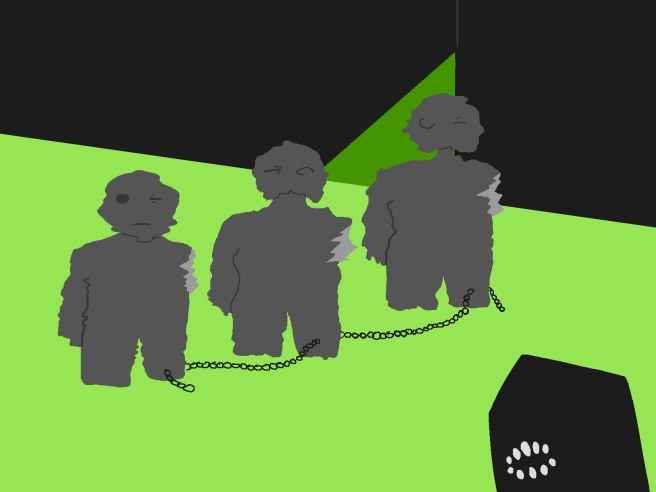
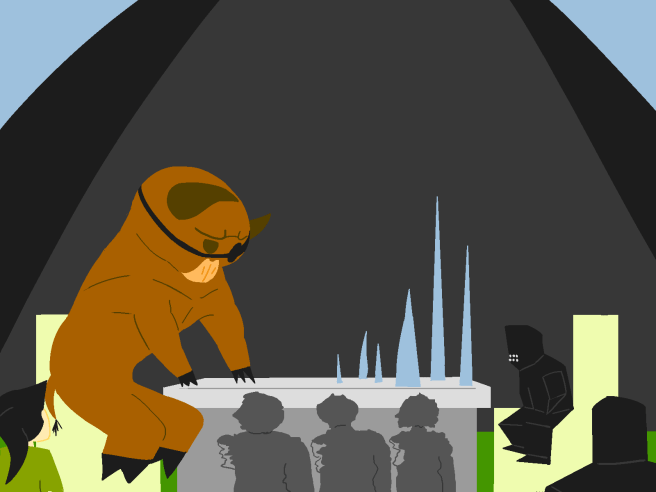
He tilted his head to the left. His horns looked like they might catch on the rafters. He tried to emulate her thumb up with both his three-fingered hands.

“Yeah, good!” said Aria, with two thumbs up. “You’ve saved me some time! Can you bring in the rest?”

HomerVStheDwarfC

The earth trembled under the minotaur’s weight when he returned with six more barrels. Soon he brought the last barrels into the barn, then sat with his arms folded over his chest. His eye watched Aria, eager for more thumbs up.

“Sort of clingy, aren’t you,” she mumbled. “Well, I’m glad to have company. I’ve been talking to imps for weeks, and they don’t do yard-work.”

The minotaur nodded as if it understood.

“You need a name. How about Homer?”

The minotaur blinked.

“Aria.” Aria pointed to her own chest. “Homer.” To the minotaur.

Homer pointed to himself and grunted twice. “Rrm-rr.”

“Yeah!” She gave a thumb up. “Homer!”

Homer pointed to Aria. “Arr-rra.”

“Yeah, Aria. I won you in a game of table-war.”

“Rra-rr rar.”

“Table-war. You saw me fight the elf. Here, follow me.” Aria led Homer behind her cabin to a table ten feet by ten feet square. She reached under the table for chests of wooden figurines and wooden cards. “I used to play with table-war geeks all the time. I’ve still got some hobby-supplies. Look, this is a good one.”

The horse-figurine had jointed legs; she made it gallop for Homer, who watched with limited comprehension.

HomerVStheDwarfD

“You know, you’re healing pretty well. I’ll bet I could enlist you with the human military right now.” She pat her minotaur between the horns. “Let’s visit the market tomorrow.”


The market was hours away nestled in a valley. Humans trickled down hillsides to flood between tents and booths. A few elves shouted of their wares, and gnomes wandered assisting official transactions.

“You’re a pretty smooth ride,” said Aria. Homer pulled her wagon between booths. “Left! Left!”

HomerVStheDwarfE

Homer veered left. The awed stares from passerby didn’t bother him; he just shaded his eye from the sun.

“Homer, check this out!” Aria pointed to a glass tank of murky water the size of a swimming pool. The walls of the tank were soldered with gold. “Seafolk. Probably wheeled that tank all the way from the pier.”

A green face pressed against the tank from inside. Its glowing egg-shaped eyes ogled Aria’s minotaur. Webbed hands with suction cups rubbed gold coins against the glass.

“Trading, huh? You got a gnome?” asked Aria. The seafolk pointed to a gnome standing outside the tank. The gnome was adorned with jewelry and shells. “What’s your name?”

“Nonoginta Novem. My English being not good.”

“Tell your merfriend I’m selling my minotaur to the human military. If they don’t give me a good deal, we’ll talk more.”

The gnome and the seafolk communicated with finger-taps through the glass wall. “Giving a thousand golds for the walk-cow. It is the offer final.”

Aria licked her lips. A thousand gold coins could buy another dragon-egg. “I’ll think about it.”

She led Homer around a corner to an enlistment booth. Behind a wooden counter, a red-headed human man in iron armor reviewed brass cards with two gnomes. These gnomes were nude; humans didn’t often decorate their help. The armored man noticed Aria and squinted at the beast she’d brought. “I was warned you’d surprise me, Twine.”

HomerVStheDwarfF.png

“One minotaur, for the human military,” said Aria. “Whadya think, Sir, uh…”

“Sir Jameson.” He signaled his gnomes, and the gnomes vaulted the counter to measure the minotaur’s muscles with string. Homer lifted his arms and tried not to step on the rocky creatures. “Never taken a minotaur.” When Sir Jameson stood, his armor-plates clanged. “They’re hard to pull from their labyrinths, and some say it’s not worth the effort.”

“Really?” Aria hopped from the wagon. “Why?”

“Homesickness. Minotaurs just keep drawing mazes in the dirt. If you get two of them together, it’s all they ever do. One draws a maze, the other navigates it.”

The gnomes felt Homer’s calves.

“So what’ll you give me for him?” asked Aria. “Seafolk over there offered a thousand gold coins.”

“Yeah, but that’s seafolk,” said Jameson. “Queen Anthrapas gave you all you needed to start a farm, and you promised you’d only ever sell to us.”

“Sure, for any monster raised on my farm, but I didn’t raise this guy. He showed up just yesterday from the Great Ax’s fracture. He’s on the market.”

Jameson shrugged. “I’ll give you voucher for fifty gold coins, and you’ll be first in line to claim any monster we catch in the wild wastes. Best I can do.”

“A hundred gold, and I’ll take three monsters.”

“I don’t suppose you’ve heard,” said Jameson, “we’re in a state of emergency. Human farmers are required to sell to the military at market value. Fifty gold coins is generous, Aria.”

Aria crossed her arms. “I haven’t heard about any emergency.”

“Ten more gnomes were found decapitated near the dwarven border,” said Jameson. “We learned just yesterday that dwarfs challenged the elves to an official table-war match for land. War’s on its way.”

Aria considered her minotaur. The gnomes crawled up his fur to measure his horns; they noted his eye-patch in the grid of dots they engraved on a brass card. “Don’t worry, Homer, they’re harmless.” She turned to Jameson. “Why are you in armor, Sir? You’re not getting brassed today, too, are you? Is this your first day on the job? Posing for a figurine in your best get-up?”

“Take it easy, Aria.”

“Don’t talk down to me. Ten years ago, you’d be following my orders. I wouldn’t even know which figurine was yours among all the others under my command. How much will you pay for my minotaur?” she asked again.

Jameson sighed. “If you do me a favor, I’ll cut you a deal.”

“Whadya need?” Aria looked down when a gnome rugged her shirt. He passed her the brass card whose grid of holes described Homer.

“There are dwarfs nearby and its making my gnomes skittish,” said Jameson. “Make them leave.”

“Dwarfs?” Aria put her hands on her hips. “Well, that’s unpleasant, but they’re allowed here, aren’t they? It’s a market, people sell stuff.”

“They’re not selling anything,” said Jameson, “and if it worries my gnomes, it worries me. Make them leave or accept my original offer. If you sell your minotaur to the seafolk, I’ll get Queen Anthrapas to come down on you like a ton of bricks.”

“Geez, okay,” said Aria. “Where are they?”


As Homer and Aria approached the drawfs’ black tent at the edge of the market, the crowds thinned. Humans checked over their shoulders. Gnomes shuffled hastily. Elves avoided the area entirely. Even Homer sensed dark tension. He sniffed the air and flared his nostrils.

Aria understood. On the deepest level, there was something wrong with dwarfs. While gnomes emerged from magma in subterranean caves but frequently visited the surface, dwarfs mostly ate downward. They mined mountains like anthills until the peaks collapsed. Their faces were featureless and flat with foreheads down to their nostrils, leaving no space for eyes.

A dwarf in coal-colored armor opened the flap of its black tent. Homer touched Aria’s shoulder. “Sorry, Homer, we’re going in. Hey! You! What are you doing here?”

HomerVStheDwarfG.png

The dwarf turned. It was four feet tall and four feet wide. The only area exposed by its armor was its teeth, dingy like the hull of a shipwreck. Its teeth crunched a stone into crumbs, and it swallowed the crumbs hungrily. Dwarfs had no lips. Maybe they were born without them, or maybe they cut them off. “Here to play. Training new commander.” The helmet was constructed to reveal only teeth, even while it spoke. Gnomes were genderless and accepted male pronouns. With dwarfs, you just couldn’t tell.

“Play? Like, table-war?” asked Aria. “Sure, I’m in. Just one game, and win or lose you have to leave. I used to be a royal commander, so you know it’ll be a good one.”

“Accepted.” The dwarf shouted as if testing a battle-screech, shaking Homer’s fur. “Gnomes!”

From the black tent, three gnomes stepped into sunlight.

Aria’s stomach turned. She hadn’t seen dwarf-owned gnomes for years; the reintroduction made her bile churn. Homer balled his hands into fists.

Each gnome was missing its left arm. Their ankles were pierced by a chain connecting the gnomes in a line. The front-most gnome had only one eye, while the other two gnomes had no eyes, no lower jaws, and no tongues. Their rocky skin had chipped and fragmented.

HomerVStheDwarfH.png

The dwarf shoved its gnomes toward Aria. “Give brass,” said the gnome with a tongue.

Aria held her brass card for the gnomes, who read its pits and grooves with their remaining fingertips.

Inside the black tent another dwarf sat at an official war table, twenty feet by twenty feet square. The table’s terrain reflected the dwarven north in miniature: icy peaks reached like stalagmites.

The gnomes looked up from Aria’s card. “Says deceased.”

“Is that alright?” asked Aria. “If you’re just training a new commander, we can play unofficially.”

Somehow, without lips, the first dwarf sneered. “Leave.”

“You’ll play with me or you won’t play at all.” Aria crossed her arms. Homer investigated the table’s sculpted peaks and glacial crevasses. “No one else will even come near you.”

“Won’t play. Leave.”

“You haven’t got a choice, you morons.” Homer tapped Aria’s shoulder. “What, what is it?”

He made a rectangle with his hands. “Rrrss.” When Aria raised an eyebrow, he pointed to her pockets. “Rrrss.” He raised one hand and waggled his fingers. It was like a gnome reading a card. “Rrrss.”

“…Brass?” Aria showed him the brass card representing himself.

Homer gave two thumbs up, then took the card and held it for the gnomes to evaluate. “Intelligent creature,” said the gnome with a tongue. “Technically allowed to command.”

While the first dwarf spat, its seated companion remained silent. “An insult! You dare!”

Aria watched her minotaur sit at the table and survey the landscape. “Do you understand what you’re doing? This game is complicated. I played for years before my first official match. You’ve seen me play, just once.” Homer mimed moving figurines across the field, then looked back at Aria. She chewed her lips. “Hey, dwarfs, take it or leave it.”

The first dwarf squeezed its gauntlets. “Fine. Play.”

“Rrrr!” Homer pointed at the mutilated gnomes, then looked at Aria. She didn’t understand what he wanted. He pointed at the dwarfs, made a fist, and pointed back to the gnomes. He then gestured over the hills, toward Aria’s farm.

“You want…” She stood up straight. “If we win, we’re taking your gnomes. It’s a fair bet, he’s never played before.”

No one knew how dwarfs perceived the world without eyes. Aria suspected their trained nostrils could detect emotions. The first dwarf sniffed in quiet contemplation. “Accepted,” it murmured, “if it plays with its brass.”

Homer nodded. “No, that’s bad,” Aria told him. “When something dies in the game, gnomes mark its brass. They can never play again, as a figurine or as a commander. If you die, I can’t sell you to the military.”

Homer didn’t seem to hear her. His eye was cool and calculating, but anger leaked from behind his eye-patch like lava trickling from a volcano as he stared at the eyeless gnomes.

HomerVStheDwarfI.png

“If you lose, and I can’t sell you, you’re working on my farm for life,” said Aria. “I’ll get you some pieces.”


“Hey! Sir Jameson!”

“Aria.” Jameson saluted, probably out of habit. “Are the dwarfs gone?”

Jameson’s gnomes sniffed the air. “No. They remain.”

“They want to play table-war,” she said. “Do you have some brasses you don’t mind losing in battle?”

Jameson squinted. “You’re not allowed to play, are you? You were killed by an elf.”

“It’s not an official match,” she lied.

Jameson sighed and tapped his fingers on the counter. “I suppose I can trust you. Aria Twine, humanity’s path to victory. We’ve got plenty of brasses from enlistments at the market.”

She drew air through her teeth. “How about game-pieces you don’t mind losing?”

“Let’s see what we’ve got.”


Tiny dwarven catapults sat atop the spires of ice. Model dwarfs in full armor manned them.

Homer aligned his own figurines. His side of the table was a snowy expanse crossed with icy gorges. A handful of humanoid figurines surrounded three trebuchets.

HomerVStheDwarfJ.png

“These are skeletons,” explained Aria. Professional military quality meant their bones were individually sculpted. “These guys are totally disposable. We’ve got lots, and no commander likes to use them. Skeletons pop up in abandoned cemeteries, and it’s sort of a faux pas to make them battle.”

“Rrg-lr-drr.”

“Skeleton, right. They’re not bright, but they can follow basic orders like ‘man the trebuchet.’ Okay?”

“Silence.” The first dwarf surveyed their field. “No helping.”

“What good would that be?” asked Aria. “You can’t train against an opponent who doesn’t even know his pieces. Anyway, Homer, see this ammunition? It’s a supply of exploding barrels. You get me?” Homer shook his head. Aria put her fists together and blasted them apart. “Kaboom.”

“Gr-brrm.”

“Yeah. Dwarfs aren’t superb at table-war, but they know their way around a siege-engine. If your skeletons load your trebuchets with explosive barrels, I give you fifty-fifty odds.” She pulled a roll of bandages from her backpack. “Take care of this, okay? This is your game-piece, Homer.”

The minotaur took the roll of bandages. He pointed to it, then to his chest. “Rrm-rr.”

“Exactly. No, no, why—” He pressed the roll of bandages into position at the head of his army. His nostrils flared. “Hey, your funeral.”

“We tire! Begin!” shouted the first dwarf.

The three mutilated gnomes each pressed their remaining right hands onto each other’s left shoulder stumps. After communing with finger-taps, the gnome with a tongue addressed the table. “Minotaur begins.”

“Okay, it’s your move first, Homer. Tell—”

“Silence!” said the first dwarf.

Aria sat beside her minotaur. Homer waved his hands over the skeletons, then pointed to his trebuchets.

“What says he?” asked the first dwarf. With just one eye among them, the gnomes somehow understood. They scrambled over the table showing how skeletons loaded explosive barrels into the trebuchet’s slings.

“Our turn,” said the first dwarf. “Obviously our superior army would finish loading their catapults first.” The first dwarf patted its silent comrade on the back. For the first time, the second dwarf uttered the guttural language of the ore-eaters. The gnomes made the dwarf figurines launch their catapults.

“Projectiles land here, here, and here.” One gnome ran a hand through the fake snow, making tracks left by the projectiles. The other gnomes scooped away skeletons and marked their brass cards as unplayable. Aria puzzled; the dwarfs could have struck Homer if they’d care too.

HomerVStheDwarfK.png

Homer motioned like he was throwing a spear.

“Human trebuchets are fired.” The gnomes tapped each others’ shoulders… for minutes.

Aria knew that no human, dwarf, elf, or seafolk understood every rule of table-war. Only gnomes could simulate the arena with accuracy. Aria wondered what had happened to make the gnomes lag. “It’s just barrels,” she said. “Plot the trajectories and move on.”

The gnome with the tongue shook his head. “Not completely true.”

“What?” Aria turned to her minotaur. Homer’s serious expression echoed the icy spires across from him. “What did he do?”

“Skeletons loaded themselves in the explosive barrels,” said the gnome. “A thousand pounds of flaming grapeshot sailing through the sky.”

“Hm.” Aria punched him in the arm. “Nice.” The almost-silent dwarf did not react, but the other covered its own teeth.

“Two dwarven catapults on fire,” said the gnome. “These dwarfs are dead.” He removed most of the dwarf-figurines from the table.

The almost-silent dwarven commander spoke in its grating language.

“Surviving dwarfs load final catapult,” translated the gnome.

Homer crossed his arms.

“Some skeletons still partially intact, and still on fire,” said the gnome. He pointed to the icy spires. “They ignite the final catapult.”

HomerVStheDwarfL.png

The almost-silent dwarven commander let a single word escape its teeth. The gnomes conferred. “The dwarfs surrender.”

The first dwarf turned to Ida. “Five hundred gold coins for your minotaur.”

“Seafolk offered twice that.”

“Ten thousand pieces of gold for the minotaur!” shouted the dwarf.

“Sorry,” said Aria. Homer lifted all three mutilated gnomes. “He’s not for sale.”


“Hey. Sir Jameson.”

Jameson stretched and yawned. “The dwarfs are gone?”

“Yep. Some of these skeletons are still usable, I’m pretty sure, and all your trebuchets.” Aria returned the brass cards.

Jameson sighed and stood at ease. “We’ll pay double market value for your minotaur.”

“I’ve had a change of heart.” Aria watched Homer lay the dwarfs’ mutilated gnomes on the grass. They sprang right up and began communicating with the humans’ intact gnomes, forming a ring of five gnomes tapping each others’ hands and shoulders. “I want to meet with Queen Anthrapas. I can’t leave my dragonling on the farm, so I’ll have to take Scales with me. Can you give me a ride?”

“I suppose,” said Jameson. “What business do you have with the queen?”

Aria watched her minotaur raise his hands and flick his fingers, trying to emulate the gnomes’ rapid hand-language. “I’m taking an apprentice.”

Next Chapter
Commentary